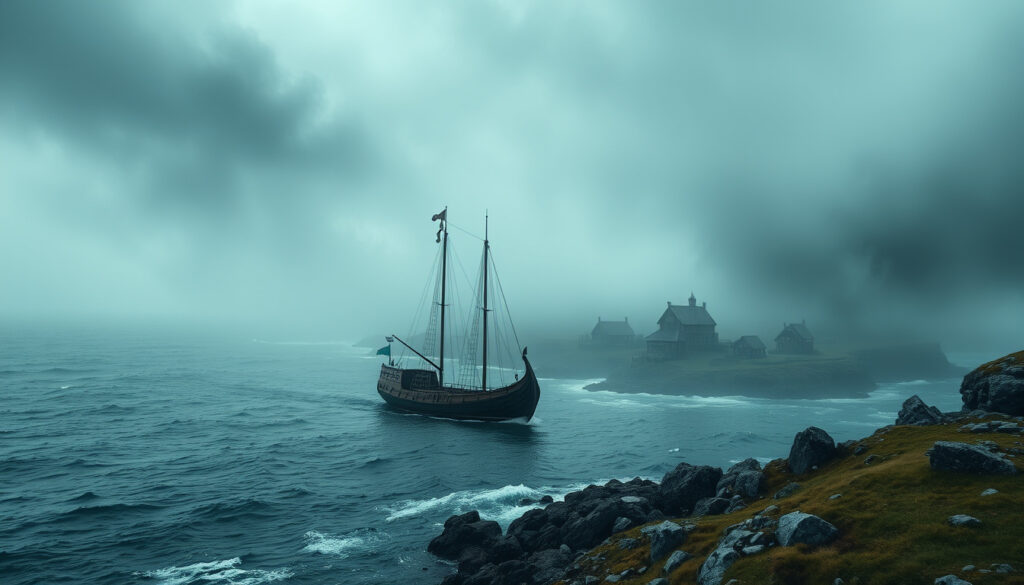
Vikings (TV Series): Filming Locations, Ending Explained
Vikings turned Ireland into Viking-age Scandinavia for six seasons, filming nearly every scene in County Wicklow’s dramatic landscapes before creator Michael Hirst chose to end his saga on his own terms. The show’s production secrets and fan debates about its legacy reveal why this series carved a distinct place in television history.
Seasons: 6 · Years Active: 2013-2020 · Creator: Michael Hirst · Primary Filming Location: Ireland · Spin-off: Vikings: Valhalla
Quick snapshot
- 6 seasons, 89 episodes (Den of Geek)
- Filmed primarily in County Wicklow, Ireland (Travel Earth)
- Ashford Studios served as production hub since 2013 (Travel Earth)
- Netflix’s exact role in Vikings’ post-History distribution for Season 6B (Claire and Jamie)
- Whether future revivals or reboots are under active discussion (Claire and Jamie)
- Vikings: Valhalla debuted 2022 on Netflix, sharing Wicklow locations (Visit Wicklow)
- Fans can visit Lough Tay (Kattegat) and Ashford Studios today (Travel Earth)
| Label | Value |
|---|---|
| Genre | Historical drama |
| Network | History Channel |
| Episodes | 89 |
| Spin-off | Vikings: Valhalla |
| Creator | Michael Hirst |
| Primary Filming County | Wicklow, Ireland |
Where was Vikings filmed in Ireland?
Vikings used County Wicklow as its main production base from day one. Lough Tay — the striking dark-water lake visible in many Kattegat scenes — sits within this county and draws visitors who recognize it from the show. According to Travel Earth (travel publication covering film tourism), the production chose Wicklow for its combination of dramatic landscapes and favorable tax incentives that made large-scale outdoor filming financially viable.
Key filming sites
- Lough Tay — The show’s central Kattegat harbor, filmed extensively in Seasons 1–2
- Blessington Lakes — Key outdoor location for coastal and camp scenes
- Luggula Estate — Private Guinness family estate used for forest trekking scenes, including moments between Ragnar and Bjorn
- Powerscourt Waterfall — Featured in various establishing shots
- River Boyne, County Meath — Doubled as the Seine River for Season 4’s Paris siege, enhanced with CGI
Irish locations used
Ashford Studios in County Wicklow became the production hub starting in 2013. Wikipedia notes that filming began there in August 2012, with longship scenes shot on August 16, 2012 at Luggala and Poulaphouca Reservoir. The production filmed 70% of Season 1 outdoors before shifting Kattegat scenes entirely to studio sets from Season 3 onward. Today, Lough Tay and Ashford Studios remain visitable, with Travel Earth documenting how tourism has followed the show’s popularity.
Why did Vikings end after 6 seasons?
Vikings did not get canceled — creator Michael Hirst chose to stop. He told Den of Geek (entertainment outlet with on-set access) that he always knew his ending point: “After six seasons and 89 episodes, that’s what I felt, finally, I’d done.” The production toll on Hirst personally, combined with an expanding episode count — History Channel pushed seasons from 10 to 20 episodes — prompted his decision.
Cancellation details
According to CBR (comic and entertainment media outlet), Vikings ended due to the production burden on Hirst, not because of ratings decline. The show’s budget reportedly doubled by the final seasons due to organic growth in scope and cast size. Collider (film and TV industry coverage) published an interview where Hirst described the personal toll of running such an ambitious series for years without a clear finish line.
Creator’s vision
Hirst’s planned conclusion tied the narrative arc to historical discovery — the final episodes show Vikings reaching North America, a beat he had envisioned from the start. Some fan speculation holds that viewership declined after Ragnar’s death in Season 4, but documentary summaries of Hirst’s Variety interview confirm the ending was his choice, not a network decision. Season 6B ultimately aired on Amazon Prime Video rather than History Channel, which some viewers mistook for a cancellation — it was a distribution shift only.
Is Vikings better than Game of Thrones?
This comparison comes up constantly in fan forums, but the sources don’t settle it — and that’s the honest answer. Both are long-running epic dramas with devoted bases, yet they differ fundamentally in approach. Some analysts note Vikings draws from known historical sagas while Game of Thrones invented its own world, making direct quality comparisons apples-to-oranges.
Key differences
The two series diverge in their fundamental approaches to storytelling, production philosophy, and narrative closure.
| Dimension | Vikings | Game of Thrones |
|---|---|---|
| Historical basis | Loosely based on sagas; known figures and events | Original fantasy fiction |
| Runtime | 6 seasons, 89 episodes (2013–2020) | 8 seasons, 73 episodes (2011–2019) |
| Season length growth | 10 → 20 episodes per season | Consistently 10 per season |
| End decision | Creator chose to finish | Network ended it |
| Visual effects approach | Outdoor filming with CGI enhancement | Predominantly studio and CGI |
The implication for viewers is that Vikings offers closure while Game of Thrones left its ending disputed for years — a difference that shapes how fans experience each series even today.
Fan opinions
Fan discourse rarely settles this debate cleanly. Vikings defenders cite its tighter historical grounding and cleaner ending; Game of Thrones fans point to scale and world-building complexity. The comparison gains relevance when planning what to watch next — the shows share a broadly “epic historical drama” audience but deliver very different narrative experiences.
Vikings offers closure; Game of Thrones left its ending disputed for years. If you value narrative completion, Vikings wins on that front — Hirst delivered his intended conclusion without external pressure.
Do you need to watch Vikings before Vikings: Valhalla?
Technically, no — Vikings: Valhalla is designed as a standalone entry point. But watching the original first enriches the experience considerably, according to Atlas of Wonders (travel and film tourism publication). The sequel series on Netflix covers events that precede the original timeline, but it assumes viewers understand the Kattegat mythology, character relationships, and historical context that the original established over six seasons.
Story connections
Vikings: Valhalla shares the same primary filming location — Ashford Studios in County Wicklow — with the original. Visit Wicklow (official tourism board) confirms both series used the same landscapes for Kattegat scenes, creating visual continuity. The character Harald Finehair appears in both series, though centuries apart in the fictional timeline — a detail that rewards original viewers.
Viewing recommendations
- New to the franchise: Start with Vikings: Valhalla if you want a low-commitment entry point, then loop back to the original
- Returning fans: Vikings Seasons 1–6 chronologically, then Valhalla as a prequel bonus
- Binge pattern: The original’s slower early seasons may test patience — Valhalla moves faster
Michael Hirst created both series, and Valhalla acknowledges the original’s events even as it tells a separate story. Skipping Vikings means missing callbacks that die-hard fans recognize immediately.
Why was Siggy killed off?
Siggy (played by Jennie Jacques) died in Season 4 of Vikings, a departure that surprised viewers given her importance to the narrative. The showrunner removed her as part of a broader shift — with Ragnar’s story concluding that same season, supporting characters like Siggy had fewer meaningful arcs to anchor.
Plot reasons
Siggy’s narrative purpose had narrowed by Season 4. Her loyalty to Rollo and eventual positioning as a mother figure lost urgency once the central conflict moved toward Ragnar’s fall and the Paris siege. Fan analyses note her death freed up story space for newer characters like Ivar, whose arrival in Season 4 reshaped the family dynamics the show would explore in Seasons 5 and 6.
Actor departure
Jacques has not publicly stated a detailed reason for leaving the series beyond contractual and creative discussions. The timing — her exit alongside Ragnar’s death in Season 4 — suggests the show restructured its ensemble deliberately, keeping characters whose arcs could extend into the later seasons and writing out those who had reached narrative completion. Vikings turned Ireland into Viking-age Scandinavia for six seasons, filming nearly every scene in County Wicklow’s dramatic landscapes, as detailed in Demogorgon co je původ.
What we know — and what we don’t
Confirmed
- 6 seasons, 89 episodes total
- Filmed in County Wicklow, Ireland
- Creator Michael Hirst chose the ending
- Ashford Studios production hub since 2013
- Kattegat shifted from outdoor to studio from Season 3
- Vikings: Valhalla shares Wicklow locations
Uncertain
- Exact quantitative viewership data before and after Ragnar’s death
- Whether Netflix influenced Vikings’ post-History distribution strategy
- Active development of revival projects
- Future plans for additional spin-offs beyond Valhalla
“I always knew where I wanted the show to go and more or less where it would end if I was given the opportunity… After six seasons and 89 episodes, that’s what I felt, finally, I’d done.”
— Michael Hirst, creator of Vikings
“Vikings was filmed almost entirely in Ireland’s Wicklow county, the same location where Kattegat in the Vikings Valhalla Netflix series was filmed.”
— Atlas of Wonders, travel and film tourism publication
For fans planning a visit to Ireland, the Vikings trail is surprisingly walkable. Lough Tay requires no booking — you can park and walk the shoreline where Kattegat’s harbor stood. Ashford Studios offers occasional tours tied to production activity. The connection between the original series and its Netflix sequel runs deeper than marketing — it’s geological, literally built into Wicklow’s stone and water. When Valhalla returns to the same lakeside cliffs, viewers who know the original locations recognize the continuity.
Related reading: White Lotus Season 3 Cast · Hart of Dixie Cast Guide
Ireland’s County Wicklow doubled as Kattegat, vividly backdropping the characters detailed in the complete Vikings cast guidecomplete Vikings cast guide, which enriches the series’ ending narrative.
Frequently asked questions
What is the plot of Vikings TV series?
Vikings follows the legend of Ragnar Lothbrok, a Norse farmer who rises to become a king and warlord. The series spans his early raids into England and France, his conflicts with his own family, and the eventual succession battles after his death in Season 4.
Who created Vikings TV series?
Michael Hirst created Vikings. He served as showrunner for all six seasons and later developed the spin-off series Vikings: Valhalla for Netflix.
How many episodes in Vikings TV series?
Vikings aired 89 episodes across 6 seasons, from 2013 to 2020.
Where can I stream Vikings TV series season 1?
Vikings streams on Netflix in most regions. Season 6B aired on Amazon Prime Video in some markets. Check local listings for availability.
What happened in Vikings TV series season 6?
Season 6 concluded the Viking Age storylines, with the final episodes depicting Viking explorers reaching North America — the narrative endpoint creator Michael Hirst had planned from the start.
Is there a Vikings TV series season 7?
No. The series concluded after Season 6. The continuation is Vikings: Valhalla, a sequel series on Netflix that covers earlier events in Viking history.
Who are the main characters in Vikings TV series?
Ragnar Lothbrok (Travis Fimmel), Lagertha (Katheryn Winnick), Floki (Gustaf Skarsgård), Bjorn Ironside (Alexander Ludwig), Rollo (Clive Standen), and Siggy (Jennie Jacques) are central figures across the series run.
Where was the fictional Kattegat actually filmed?
Kattegat’s harbor scenes were filmed at Lough Tay in County Wicklow, Ireland. Forest scenes used Luggula Estate, Blessington Lakes, and Powerscourt Waterfall. The production hub was Ashford Studios in the same county.
More related posts
 Best Gift Shops Near Me: Find Irish Souvenirs & Unique Gifts
 No Hard Feelings Cast – Stars, Roles and Production Facts
 Side Effects of Prednisone: Risks, Warnings & Avoidance
 Volume of a Cube: Formula, Examples & Step-by-Step Guide
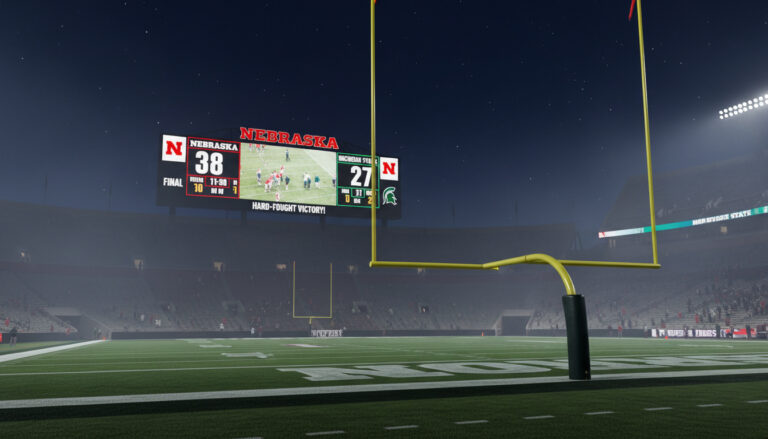 Mi State vs Nebraska – Nebraska Wins 38-27 Full Recap
 Google Sheets Budget Template: Free Guide & 50/30/20 Setup
 Is Canola Oil Banned in Europe? The Truth Behind the Myth
 Samsung Galaxy S23 Ultra – Specs Review and Buying Guide