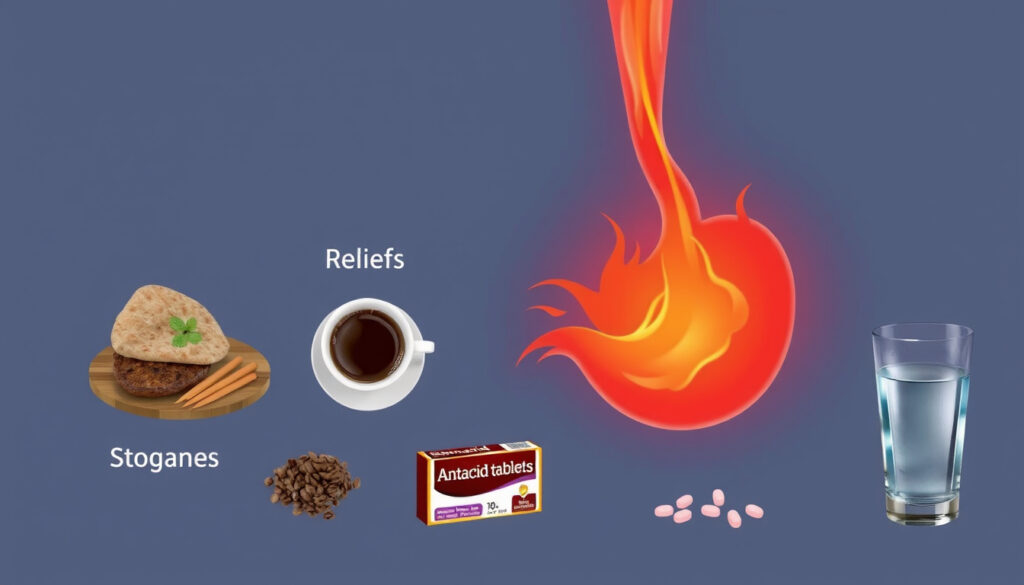
What Does Heartburn Feel Like? Symptoms, Causes, and Relief
When that familiar burning rises in your chest, you may wonder: is this my heart or just heartburn? Over 60 million U.S. adults experience it at least once a month, according to the National Institutes of Health (NIH MedlinePlus Magazine), and knowing the exact sensation can help you decide whether to reach for an antacid or head to the emergency room.
Monthly prevalence: Over 60 million U.S. adults (NIH MedlinePlus) ·
Pregnancy: More than 50% of pregnant women (Cleveland Clinic) ·
GERD prevalence: About 20% of U.S. adults (Cleveland Clinic) ·
Typical duration: Minutes to several hours (Cleveland Clinic)
Quick snapshot
- A burning chest pain caused by stomach acid rising into the esophagus (Cleveland Clinic) (Mayo Clinic)
- GERD is the condition that causes recurrent heartburn (Mayo Clinic)
- Antacids provide temporary relief for most people (Cleveland Clinic) (Mayo Clinic)
- Why some people develop frequent heartburn while others don’t is not fully understood (NIDDK)
- The exact role of hiatal hernia in heartburn is still debated (NHS Cheshire and Merseyside)
- Heartburn often occurs after eating, when lying down, or when bending over (Cleveland Clinic)
- Pain can last from a few minutes to several hours (Cleveland Clinic)
- If heartburn occurs more than twice a week, see a doctor to evaluate for GERD (Mayo Clinic)
- Any chest pain with shortness of breath, cold sweat, or nausea warrants emergency care (Harvard Health Publishing)
Five key facts sum up the basics of heartburn — and the first one surprises many people: it’s not about the heart at all.
| Label | Value |
|---|---|
| Definition | A burning pain in the chest, actually felt in the esophagus, not the heart (Cleveland Clinic) |
| Typical sensation | Hot, burning, or acidic feeling rising from the stomach to the throat (Cleveland Clinic) |
| Common triggers | Large meals, spicy or fatty foods, caffeine, alcohol, lying down after eating (NIH MedlinePlus Magazine) |
| Duration | Minutes to several hours; often resolves on its own or with antacids (Cleveland Clinic) |
| Prevalence | Over 60 million Americans experience heartburn at least monthly (NIH MedlinePlus Magazine) |
| Heartburn vs. heart attack | Heartburn is a burning sensation triggered by food or position; heart attack often involves pressure, squeezing, and radiating pain (Mayo Clinic) |
How do you know if you have heartburn?
The classic sign is a burning sensation that travels upward. Here is what to watch for — and when it usually strikes.
What is the typical burning sensation?
- Most people describe it as a hot, acidic feeling rising from the stomach up into the chest and sometimes the throat (Cleveland Clinic).
- It can feel like a fiery discomfort behind the breastbone, often accompanied by a sour taste (Mayo Clinic).
Where is heartburn felt?
- The pain is centered in the middle of the chest, behind the breastbone (sternum) (Cleveland Clinic).
- It can radiate upward to the neck, throat, or even the back of the mouth (Harvard Health Publishing).
When does heartburn usually occur?
- Soon after a large or fatty meal (NIH MedlinePlus Magazine).
- When lying down or bending over within two to three hours of eating (Cleveland Clinic).
- At night, especially if the person eats close to bedtime (Mayo Clinic).
Bottom line: Heartburn is a burning discomfort that follows meals and worsens when reclining. The timing and trigger are the strongest clues it’s not your heart.
The pattern is consistent: food forward, fire follows. That predictability is what makes heartburn — while uncomfortable — manageable at home for most people.
What are the 7 symptoms of heartburn?
One symptom dominates, but heartburn rarely travels alone. Here are the seven most common signals the body sends.
| Symptom | What it feels like | Key source |
|---|---|---|
| Burning in the chest | Hot, fiery sensation behind the breastbone | Cleveland Clinic |
| Bitter/acidic taste | Sour or salty fluid in the back of the throat | Mayo Clinic |
| Difficulty swallowing (dysphagia) | Feeling that food is stuck in the chest | NIDDK |
| Lump in the throat sensation | Feeling of a tight band or globus | Mayo Clinic |
| Coughing or hoarseness | Chronic dry cough, especially at night | Cleveland Clinic |
| Belching and bloating | Excessive gas after meals | NIH MedlinePlus Magazine |
| Nausea | Feeling queasy, sometimes with regurgitation | Harvard Health Publishing |
Bottom line: Burning chest pain plus a sour taste are the hallmark pair. If you have three or more of these symptoms regularly, it’s time to talk to a doctor.
The implication: heartburn is rarely one note. The cluster of symptoms — especially the taste and cough — helps separate it from cardiac issues.
What could be mistaken for heartburn?
Several conditions produce chest discomfort that feels remarkably like heartburn. Knowing the difference can be lifesaving.
Heart attack vs. heartburn: key differences
Four comparisons, one crucial takeaway: heart attack pain is not a burn.
| Feature | Heartburn | Heart attack |
|---|---|---|
| Sensation | Hot, burning, rising | Pressure, tightness, squeezing, aching (Mayo Clinic) |
| Trigger | Meals, lying down, bending over | Exertion or stress; can occur at rest (Harvard Health Publishing) |
| Relief | Antacids, sitting up | Not relieved by antacids (BGA Pulmonary & Critical Care) |
| Accompanying symptoms | Sour taste, belching, nausea | Shortness of breath, cold sweat, pain radiating to arm/jaw (Mayo Clinic) |
Gallbladder disease
- Pain in the upper right abdomen or in the center of the chest after fatty meals, often mistaken for heartburn (Mayo Clinic).
Gastritis and peptic ulcers
- A gnawing or burning pain in the upper stomach that can radiate to the chest, but is usually located lower than heartburn (NIDDK).
Esophageal spasms
- Sudden, severe chest pain that can mimic a heart attack, but is caused by abnormal muscle contractions in the esophagus (Mayo Clinic).
Costochondritis
- Inflammation of the cartilage connecting ribs to the breastbone; pain is sharp and reproducible by pressing on the chest wall (Cleveland Clinic).
Bottom line: If antacids don’t touch the pain, or if the pain is pressure-like and spreads beyond the chest, assume a cardiac event until proven otherwise. Call 911.
The trade-off: mistaking heartburn for a heart attack leads to unnecessary ER visits, but the opposite mistake is fatal. When in doubt, act as if it’s a heart attack.
How to tell if it is just heartburn?
When the burning strikes, a few quick checks can tip the scale toward heartburn — or toward the ER.
When to worry about heart attack
- Pain that feels like pressure, tightness, or squeezing rather than burning (Mayo Clinic).
- Pain that spreads to the shoulder, arm, back, neck, or jaw (Mayo Clinic).
- Accompanied by shortness of breath, cold sweat, nausea, or lightheadedness (Mayo Clinic).
Red flags checklist
- Duration: Heart attack pain lasts more than a few minutes or goes away and returns (Cleveland Clinic).
- Exertion: Pain that gets worse with physical activity and better with rest is suspicious for cardiac cause (Harvard Health Publishing).
- Response to antacids: Heartburn usually improves within minutes after taking an antacid; heart attack does not (Mass General Brigham).
Using the ‘PQRST’ method to assess pain
- P – Provocation: What makes it worse? Eating? Lying down? Or exertion?
- Q – Quality: Is it a burn (heartburn) or a pressure/squeezing (heart attack)? (Mayo Clinic)
- R – Region/Radiation: Does it stay in the chest or spread to arm/jaw?
- S – Severity: On a scale of 1-10, how intense is it?
- T – Timing: Did it start after a meal? How long has it lasted?
Bottom line: If the pain is a burn that came after a meal and an antacid helps, it’s almost certainly heartburn. If it’s a pressure that worsens with walking and comes with sweating, treat it as a heart attack.
The catch: even doctors can’t always tell without an EKG. If you’re unsure, the only safe move is to get checked.
How do you make heartburn go away?
When the fire rises, quick relief is possible — and long-term prevention is even better.
Over-the-counter antacids and acid reducers
- Antacids like calcium carbonate (Tums, Rolaids) neutralize stomach acid and provide relief within minutes (Cleveland Clinic).
- Alginates (Gaviscon) form a foam barrier that prevents acid from rising into the esophagus (NIDDK).
- H2 blockers (Pepcid, Zantac) reduce acid production; PPIs (Prilosec, Nexium) block acid more powerfully (Mayo Clinic).
Lifestyle changes that work
- Eat smaller meals and avoid lying down for 2-3 hours after eating (Mayo Clinic).
- Elevate the head of the bed by 6-8 inches to keep acid down at night (Cleveland Clinic).
- Avoid trigger foods: spicy, fatty, or acidic foods, caffeine, alcohol, chocolate, and mint (NIH MedlinePlus Magazine).
When to see a doctor for chronic heartburn
- Heartburn occurs more than twice a week despite lifestyle changes (Mayo Clinic).
- Difficulty swallowing or pain with swallowing develops (NIDDK).
- Unintentional weight loss, persistent nausea, or vomiting (Cleveland Clinic).
Bottom line: For occasional heartburn, an antacid and an upright posture are enough. For chronic symptoms, a PPI and dietary changes under medical supervision offer the best control.
Why this matters: regular heartburn is manageable, but ignoring it can lead to esophagitis, strictures, or Barrett’s esophagus. Early treatment prevents progression.
Heartburn: What’s clear and what’s not
Confirmed facts
- Heartburn is caused by stomach acid refluxing into the esophagus (Cleveland Clinic)
- Heartburn is not related to the heart (Cleveland Clinic)
- Antacids provide temporary relief for most people (Cleveland Clinic)
- Certain foods, alcohol, and some medications make heartburn more likely (NIH MedlinePlus Magazine)
- Heart attack symptoms often include pressure, squeezing, and radiating pain, not burning (Mayo Clinic)
What’s unclear
- Why some people experience frequent heartburn while others do not is not fully understood (NIDDK)
- The exact role of hiatal hernia in heartburn is still debated (NHS Cheshire and Merseyside)
- Whether low-acid diets meaningfully reduce heartburn for all patients is not confirmed by large trials (Mayo Clinic)
- The relationship between stress and heartburn is not fully understood, though stress can worsen symptoms (Harvard Health Publishing)
- Why heartburn is so common during pregnancy is not fully understood (Cleveland Clinic)
Expert voices on heartburn
Heartburn is a burning pain in your chest. It’s actually in your esophagus, not your heart.
Pressure, tightness, pain, or a squeezing or aching sensation in your chest or arms that may spread to your neck, jaw or back – these could be signs of a heart attack.
Mayo Clinic (top-ranked hospital system)
Burning feeling in your chest after eating or at nighttime; pain that gets worse when you lie down or bend over.
The message from every expert is the same: the quality of the pain — burn versus pressure — is the single most reliable differentiator. For the millions of Americans who reach for antacids each month, the choice becomes straightforward: if it burns and antacids help, you’re in good company. If it presses and doesn’t ease, you’re in danger. For anyone in the U.S. reading this, the next time that familiar fire rises, remember: sit up, take a calcium chew, and wait ten minutes. If the relief doesn’t come, don’t wait — dial 911.
Related reading: Heartburn Overview – Symptoms, Causes, and Relief · Heart Disease and Heartburn: What’s the Overlap?
To better understand the condition, we can detail the symptoms of heartburn and how they differ from those of a heart attack.
Frequently asked questions
Can heartburn cause back pain?
While heartburn pain is typically felt in the chest and throat, it can radiate to the upper back in some people. However, mid-back pain that is severe or persistent should be evaluated by a doctor, as it could be a sign of a heart attack or other condition (Mayo Clinic).
Is heartburn worse at night?
Yes, heartburn often worsens at night because lying down allows stomach acid to flow more easily into the esophagus. Elevating the head of the bed and avoiding meals 2-3 hours before bedtime can help (Cleveland Clinic).
Does heartburn cause coughing?
Yes. Chronic cough is a common symptom of GERD-related heartburn, especially at night. The acid irritates the throat and airways, triggering a dry cough (Mayo Clinic).
Can stress cause heartburn?
Stress does not directly cause heartburn, but it can exacerbate symptoms by increasing stomach acid production and altering digestion. Managing stress through relaxation techniques may reduce episodes (NIH MedlinePlus Magazine).
What foods trigger heartburn?
Common triggers include spicy foods, fatty or fried foods, citrus fruits, tomatoes, chocolate, mint, caffeine, alcohol, and carbonated drinks (NIH MedlinePlus Magazine).
Can I have heartburn without GERD?
Yes. Occasional heartburn is normal and does not necessarily mean you have GERD. GERD is diagnosed when heartburn occurs two or more times per week and/or causes damage to the esophagus (Mayo Clinic).
Does drinking water help heartburn?
Drinking a glass of water can help by diluting stomach acid and washing it back down the esophagus. However, water alone is not a reliable treatment; antacids or acid reducers are more effective for lasting relief (Cleveland Clinic).
More related posts
 House of the Dragon Season 3: Release Date, Trailer, Cast 2026
 Film Developing Near Me in Dublin: Labs, Prices & Services
 Mediterranean Restaurant Near Me: Cork Dining & Health Guide
 Upholstery Cleaning Near Me: Costs, Worth It & Ireland Services
 UEFA Women’s Euro 2025: Winner, Results & Highlights
 The Great Gatsby Movie – Plot, Cast, Reviews Guide
 What Is a Guarantor? Definition, Risks & Qualifications
 Honda Dealer Near Me in Ireland: Best Time to Buy & Reliable Models