How the Grinch Stole Christmas – Complete Story Guide
Published in 1957, Dr. Seuss’s “How the Grinch Stole Christmas!” follows a bitter creature who attempts to destroy the holiday for the cheerful Whos of Whoville, only to discover that Christmas spirit transcends material possessions. The story has become a seasonal staple, spawning multiple film adaptations and introducing phrases like “heart grew three sizes” into common parlance.
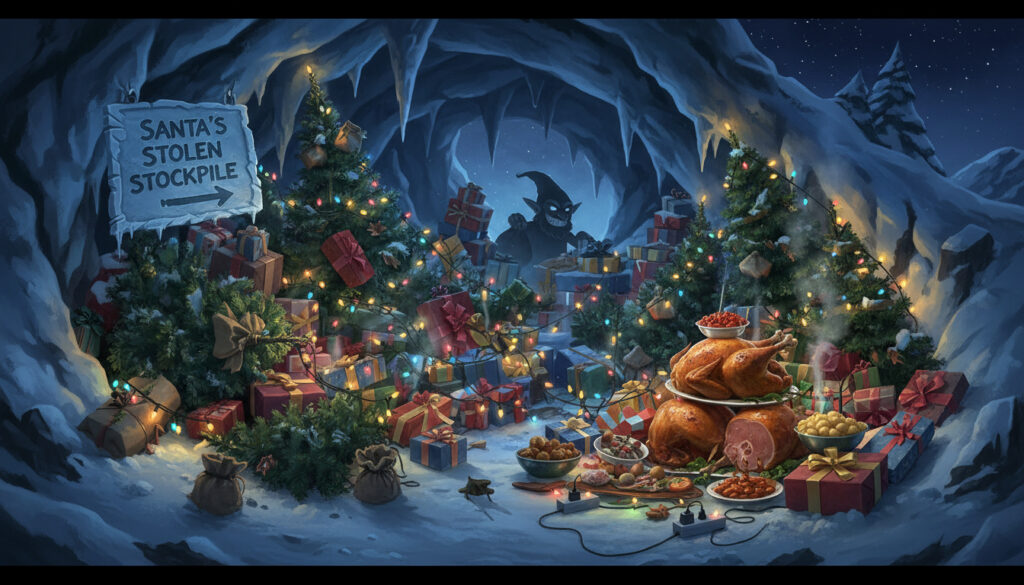
The narrative centers on the Grinch, a green, furry recluse residing atop Mount Crumpit with his loyal dog Max. Annoyed by 53 years of noisy Christmas celebrations below, he conceives a plan to steal every decoration, gift, and morsel of food from the town on Christmas Eve.
His scheme ultimately fails when he witnesses the Whos singing joyfully despite their losses, triggering an epiphany about community and love that literally causes his undersized heart to expand according to the original text. This transformation from villain to participant has cemented the tale as a lasting parable on the true meaning of the holiday.
What is the plot of How the Grinch Stole Christmas?
The story unfolds as the Grinch disguises himself as Santa Claus, fitting Max with antlers to serve as a reindeer. He descends into Whoville via sleigh and begins systematically stripping homes of their Christmas trappings, stuffing them up the chimney as detailed in plot summaries.
During his burglary, he encounters Cindy-Lou Who, a small child who briefly interrupts him. The Grinch lies about fixing a “light-flicker” on her tree before sending her back to bed, continuing his theft undetected until every last item is packed onto his sleigh.
Key insights from the narrative include:
- The Grinch despises Christmas celebrations for 53 years before acting on his resentment
- He disguises himself as Santa Claus using his dog Max as a makeshift reindeer
- Cindy-Lou Who briefly catches him during the theft but accepts his fabricated excuse
- The Whos sing joyfully despite losing all material possessions
- His heart grows “three sizes” upon realizing the true meaning of Christmas
- The story ends with him carving the “roast beast” at their communal feast
The following details define the original publication:
| Fact | Details |
|---|---|
| Original Title | How the Grinch Stole Christmas! |
| Author | Theodor Seuss Geisel (Dr. Seuss) |
| Publisher | Random House |
| Publication Date | October 24, 1957 |
| Format | Rhymed verse picture book |
| Setting | Whoville and Mount Crumpit |
| Protagonist | The Grinch (green, furry creature) |
| Sidekick | Max (the dog) |
| Key Child Character | Cindy-Lou Who |
| Central Symbol | Heart growing three sizes |
| Initial Heart Condition | Two sizes too small |
| Ending | Grinch joins Whos’ feast |
Who wrote How the Grinch Stole Christmas and when was it published?
Theodor Seuss Geisel’s Literary Creation
Theodor Seuss Geisel, writing under the pen name Dr. Seuss, authored the book as a fictional parable. Historical records confirm that Geisel, a celebrated children’s book author and illustrator, created the work without basing it on specific true events, though it reflects broader themes of holiday commercialization.
Publication and Format
Random House published the volume on October 24, 1957, as a 64-page rhymed verse picture book featuring Geisel’s distinctive illustrations. The work emerged during a prolific period in the author’s career, adding to his growing catalog of titles that used whimsical language to address moral questions.
The book arrived during the post-war consumer boom of the 1950s, a period of increased holiday commercialization that likely influenced the story’s anti-materialist themes. Despite this timing, no evidence suggests the Grinch character represents any specific real individual.
What are the major adaptations of How the Grinch Stole Christmas?
The 1966 Animated Television Special
MGM released the first adaptation on December 18, 1966, as a televised special directed by Chuck Jones. The production remains largely faithful to the original book, featuring narration and voice performance by Boris Karloff. The special introduced the memorable song “You’re a Mean One, Mr. Grinch,” which has become synonymous with the character.
The 1966 version stands as the closest visual translation of Seuss’s text, maintaining the concise narrative structure while adding musical elements that enhance rather than alter the core plot.
The 2000 Live-Action Feature Film
Director Ron Howard’s live-action interpretation, released November 17, 2000, cast Jim Carrey as the Grinch and significantly expanded the narrative. The film introduces elaborate backstory, depicting childhood bullying and trauma that explain the Grinch’s isolation. It features Mayor May-Who as an antagonist and develops a romantic subplot involving Martha May Whovier.
Unlike the book, the 2000 film shows the Grinch saving Cindy-Lou Who from a falling sleigh and concludes with the feast taking place in his cave rather than in Whoville, representing a significant departure from the source material’s ending.
The 2018 Animated Feature Film
Illumination Entertainment released a 3D animated version on November 9, 2018, with Benedict Cumberbatch voicing the titular character. This adaptation emphasizes the Grinch’s inventive use of gadgets and expands Cindy-Lou Who’s role, making her central to inviting him to festivities. The production places greater emphasis on family relationships and forgiveness themes.
What is the true meaning of Christmas in the Grinch story?
The Symbolism of Heart Growth
The narrative uses the Grinch’s heart condition—initially “two sizes too small”—as physical metaphor for emotional stuntedness and isolation. When he witnesses the Whos singing despite his theft, his realization that Christmas means “a little bit more” triggers literal cardiac expansion, symbolizing his newfound capacity for empathy and connection.
Anti-Materialism and Redemption
The central moral rejects consumerism, emphasizing that the holiday derives meaning from communal gathering rather than commercial goods. Literary analyses note that the Grinch’s criticism of disposable gifts and excessive feasting reflects broader themes of redemption through compassion, particularly as Cindy-Lou Who’s innocence helps catalyze his transformation.
While often interpreted as a critique of Christmas commercialization, the text never explicitly condemns celebration itself—rather, it distinguishes between performative materialism and genuine communal spirit, suggesting the fault lies not in the festivities but in their empty execution.
How has the Grinch story evolved across different decades?
- : Random House publishes the original picture book by Dr. Seuss, establishing the core narrative
- : CBS airs the Chuck Jones animated special with Boris Karloff, becoming an annual television tradition
- : Universal Pictures releases the Ron Howard live-action film starring Jim Carrey, adding psychological depth to the character
- : Illumination releases the 3D animated feature, updating the visuals while maintaining the redemption arc
Is How the Grinch Stole Christmas based on a true story?
Established Facts
- Fictional parable created by Theodor Geisel
- Published October 24, 1957 by Random House
- No historical basis in actual events
- Whoville and Mount Crumpit are imaginary locations
- The Grinch character is invented
Uncertain or Debated
- Specific folkloric inspirations for Mount Crumpit’s name
- Personal experiences of Geisel that influenced the themes
- Whether specific Who characters reference real individuals
- Exact inspiration for the “two sizes too small” cardiac detail
The work functions as a moral fable rather than historical documentation. While Geisel drew upon observable holiday excesses, no evidence supports the narrative being based on specific true events or real figures.
Why does How the Grinch Stole Christmas remain culturally significant?
The book and its adaptations have sold millions of copies and generated annual viewings for over half a century. Cultural critics note that the story’s endurance stems from its accessible critique of holiday commercialization and its universal message about redemption through community.
Phrases like “heart grew three sizes” have entered common English usage to describe profound emotional transformations. The narrative remains a top-selling Seuss title and continues to influence Christmas media that emphasize spirit over materialism. For those dealing with seasonal home maintenance, finding reliable Water Heater Repair Near Me – San Jose Costs, Signs & Services can be as essential as holiday preparations.
Annual broadcasts of the 1966 special maintain its presence in holiday programming, while the 2000 and 2018 films have introduced the story to new generations with updated visual styles and expanded character development. Media analysts emphasize how each generation finds relevant meaning in the Grinch’s journey from isolation to participation.
What sources document the Grinch’s literary history?
Primary documentation includes Random House publications, Seuss estate archives, and academic literary analyses. When researching holiday traditions or seeking official information, verifying sources remains as important as confirming an IRS Phone Number to Talk to a Person – Official Lines, Hours and Tips during tax season.
“And the Grinch, with his Grinch-feet ice cold in the snow, stood puzzling and puzzling: ‘How could it be so? It came without ribbons. It came without tags. It came without packages, boxes or bags.'”
— Dr. Seuss, “How the Grinch Stole Christmas!” (1957)
“Then the Grinch thought of something he hadn’t before! What if Christmas, he thought, doesn’t come from a store. What if Christmas…perhaps…means a little bit more!”
— Dr. Seuss, “How the Grinch Stole Christmas!” (1957)
What is the lasting legacy of How the Grinch Stole Christmas?
The 1957 picture book by Dr. Seuss has secured its position as a definitive holiday text through multiple film adaptations and enduring thematic relevance. Its portrayal of redemption through communal celebration, coupled with visual innovations across animated and live-action formats, continues to influence seasonal storytelling while reminding readers that holiday meaning derives from human connection rather than material accumulation.
Frequently Asked Questions
Who is Cindy Lou Who?
Cindy Lou Who is a young Who girl, approximately six years old, who briefly encounters the Grinch during his Christmas Eve theft. She accepts his lie about fixing her tree’s “light-flicker” and returns to bed, representing innocence and the holiday’s true essence.
What are the main differences between the Grinch book and movies?
The book presents a concise 64-page narrative without backstory. The 2000 film adds extensive childhood trauma and romance subplots. The 2018 version emphasizes gadgets and family themes. All versions retain the core theft, singing Whos, and heart growth.
Why does the Grinch’s heart grow three sizes?
The physical transformation symbolizes his emotional awakening. After hearing the Whos celebrate despite losing their possessions, he realizes Christmas represents community rather than material goods, triggering his heart to expand from “two sizes too small.”
How many pages is the original Grinch book?
The original Random House publication contains approximately 64 pages of rhymed verse and illustrations, making it a concise picture book suitable for young readers while containing complex themes about materialism.
What is Mount Crumpit?
Mount Crumpit is the fictional peak located just north of Whoville where the Grinch resides in a cave with his dog Max. He plans to dump his stolen Christmas loot from its summit before his transformation occurs.
More related posts
 Taylor Swift Jet Tracker: Maps, Tail Numbers & Live Updates
 Rangers vs Red Sox – 2024 Series Results and Recap
 Untamed Miniseries Cast: Complete List of Actors and Characters
 What Does Heartburn Feel Like? Symptoms, Causes, and Relief
 What Is a JPG vs PNG – Compression, Transparency and Best Uses
 VA Disability Pay Dates 2024: Full Schedule & Guide
 Redmi Note 9 5G: Is It Still Worth Buying in 2026?
 Highest Paid NFL Player – 2024 Leader and Top 10 List