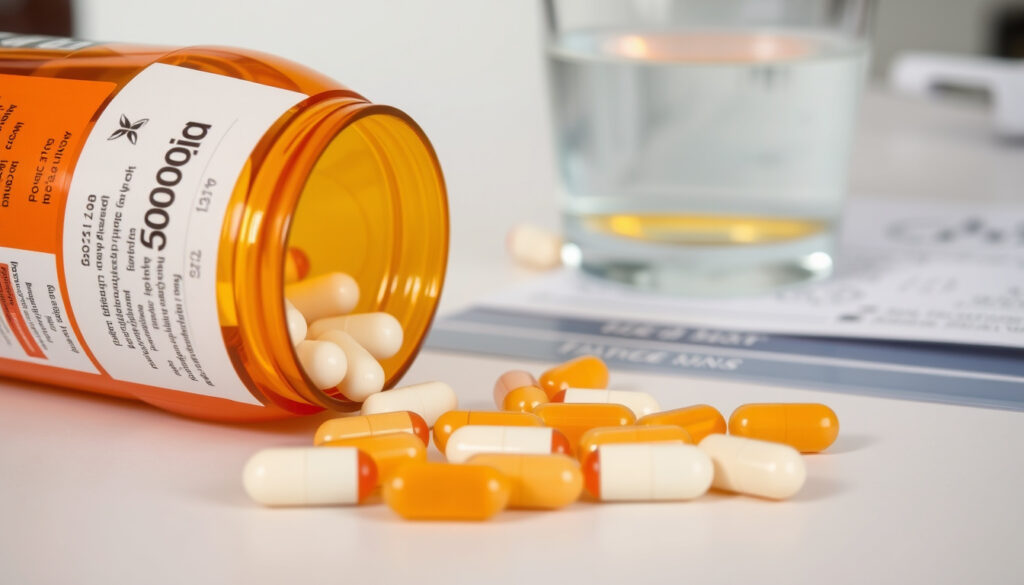
What Is Amoxicillin 500mg Used For? Uses, Dosage, Side Effects
If you’ve ever had a painful ear infection or a stubborn sinus infection that just wouldn’t quit, chances are your doctor prescribed a course of amoxicillin. It’s one of the most commonly prescribed antibiotics in the world — and for good reason. But what exactly does that 500mg capsule do, and when should you take it? Here’s what you need to know about this frontline antibiotic, how to use it safely, and why doctors are increasingly careful about when they reach for it.
Commonly treats: Ear, sinus, chest, and urinary tract infections ·
Standard adult dose: 500 mg every 8 hours (three times a day) ·
Time to symptom improvement: 24 to 72 hours ·
Most common side effect: Diarrhea (up to 1 in 5 patients) ·
Typical course length: 7 to 10 days
Quick snapshot
- Amoxicillin treats bacterial infections like ear, sinus, chest, and urinary tract infections (NHS (UK health authority))
- Standard adult dose is 500 mg every 8 hours (Mayo Clinic (U.S. medical center))
- Does not treat viral infections like colds or flu (FDA (U.S. drug regulator))
- Exact time to full recovery varies by infection type (NCBI StatPearls (medical reference))
- Optimal treatment duration for some infections (e.g., sinusitis) is still debated (Mayo Clinic)
Six key specs, one consistent thread: amoxicillin 500mg is a moderately potent penicillin antibiotic with a short half-life and a well‑studied safety profile.
| Specification | Value | Source |
|---|---|---|
| Drug class | Penicillin antibiotic | DrugBank (pharmacology database) |
| Common strength | 500 mg capsule or tablet | WebMD (consumer health reference) |
| Typical frequency | Every 8 hours (three times a day) | Mayo Clinic |
| Route of administration | Oral | FDA AMOXIL label (manufacturer prescribing info) |
| Typical course length | 7 to 10 days | NHS |
| Peak effect time | 1–2 hours after oral dose (time to peak serum concentration) | DrugBank |
| Half-life | Approximately 61 minutes (normal renal function) | DrugBank |
| Notable drug interactions | Oral contraceptives (potentially reduced efficacy), warfarin, methotrexate | MedlinePlus (U.S. National Library of Medicine) |
| Most common side effect | Diarrhea (up to 1 in 5 patients) | MedlinePlus |
| Serious allergic reaction estimate | Anaphylaxis incidence < 0.01% | Mayo Clinic |
What infections does amoxicillin 500mg treat?
Common bacterial infections treated by amoxicillin
- Ear infections (acute otitis media) — 500 mg every 8 hours for 7–10 days (NCBI StatPearls)
- Sinus infections (bacterial sinusitis) — 500 mg every 8 hours for 7–14 days (NHS)
- Chest infections (bronchitis, pneumonia) — 500 mg every 8 hours for 7–10 days (Mayo Clinic)
- Skin infections and dental abscesses (NHS)
- Urinary tract infections (UTIs) (DrugBank)
Infections amoxicillin does not treat (viral)
- Colds, flu, most sore throats (viral pharyngitis) (FDA)
- COVID‑19 and other viral respiratory illnesses
- Fungal or parasitic infections
Taking amoxicillin for a viral infection won’t help and speeds up antibiotic resistance — the FDA advises patients to expect a careful diagnosis before any antibiotic is prescribed.
The implication: amoxicillin 500mg covers a broad but specific set of bacteria. For anything viral, it’s not just useless — it’s harmful to future efficacy.
Is 500mg of amoxicillin 3 times a day strong?
Typical adult dosage for common infections
- For most adult infections, 500 mg every 8 hours is the standard starting dose (Mayo Clinic)
- Some infections (e.g., pneumonia) may be treated with 875 mg every 12 hours (Mayo Clinic)
- Pediatric dosing is weight‑based and varies (NHS)
When higher or lower doses are used
- Higher doses (875 mg) reserved for more resistant infections or severe cases
- Lower doses (250 mg) sometimes used for children or mild infections (FDA AMOXIL label)
- The 500 mg dose is considered appropriate for most adults and is not unusually “strong” in medical terms (Mayo Clinic)
For the average adult with a typical bacterial infection, 500 mg three times daily hits the therapeutic sweet spot — strong enough to clear the bacteria, but lower than the maximum dose used for severe infections.
The pattern: dose selection is about matching the infection, not making a statement. More is not better—standard doses reduce side effects while maintaining efficacy.
What to avoid when taking amoxicillin 500mg?
Food and drink interactions
- Can be taken with or without food; taking with food may reduce stomach upset (WebMD)
- Avoid acidic drinks (like citrus juices) that may interfere with absorption
- Simple meals and hydration recommended if nausea or diarrhea occur (NHS)
Medication interactions
- Oral contraceptives: amoxicillin may reduce effectiveness (MedlinePlus)
- Blood thinners (warfarin) — increased bleeding risk
- Methotrexate — increased toxicity
- Other antibiotics may interact; always inform your doctor of all medications
Alcohol and amoxicillin
- Alcohol does not directly stop amoxicillin from working, but it may worsen side effects like nausea and dizziness (NHS)
- The NHS advises avoiding alcohol during treatment to reduce strain on your body
Some interactions — especially with contraceptives — are controversial. The MedlinePlus notes the evidence is mixed, but many clinicians still recommend backup contraception while on amoxicillin.
The trade-off: amoxicillin is generally well‑tolerated, but a few lifestyle adjustments can prevent unnecessary side effects or reduced efficacy.
How quickly does amoxicillin 500mg take to work?
Onset of action for different infections
- Many patients feel symptom improvement within 24–72 hours (NHS)
- For ear infections, improvement may come faster — often within 48 hours (NCBI StatPearls)
- For sinusitis, full resolution can take 7–14 days despite early symptom relief
Factors affecting speed of recovery
- Infection severity and location
- Bacterial susceptibility to amoxicillin
- Patient’s immune system health
- Taking doses exactly on schedule (NHS)
If you see no improvement after 3 full days, the infection may be resistant or not bacterial — Mayo Clinic advises contacting your doctor for a possible switch.
Why this matters: expecting immediate results can lead to frustration or improper early discontinuation. The 24–72 hour window is the body’s response starter — full recovery takes time.
Why are doctors hesitant to prescribe amoxicillin?
Antibiotic resistance concerns
- Overuse of amoxicillin drives bacterial resistance, making infections harder to treat (FDA)
- Inappropriate prescribing for viral infections accelerates resistance (FDA)
- Resistant bacteria like MRSA are increasingly common (NCBI StatPearls)
When amoxicillin is not appropriate
- For mild infections that may clear on their own (e.g., uncomplicated sinusitis)
- When the patient has a history of penicillin allergy (Mayo Clinic)
- If the specific bacteria are known to be resistant
- For prophylaxis in certain situations (though sometimes used)
Amoxicillin is both a lifesaving tool and a victim of its own success. The FDA estimates that up to 30% of outpatient antibiotic prescriptions are unnecessary — each one chips away at the drug’s future effectiveness.
The implication: a doctor’s hesitation isn’t lack of concern — it’s stewardship. Prescribing only when truly needed keeps amoxicillin working for when it’s really necessary.
How to take amoxicillin 500mg: step‑by‑step guide
- Take exactly as prescribed — do not change the dose or frequency (NHS)
- Space doses evenly: every 8 hours (set alarms if needed)
- Can take with or without food; if stomach upset occurs, take with a meal (WebMD)
- Finish the full course — do not stop early even if you feel better (FDA)
- If you miss a dose, take it as soon as you remember; if close to next dose, skip the missed dose (NHS)
- Store at room temperature away from moisture and heat
Confirmed facts
- Amoxicillin is effective against Streptococcus pneumoniae, Haemophilus influenzae, and other gram‑positive bacteria (NCBI StatPearls)
- Standard adult dose is 500 mg every 8 hours (Mayo Clinic)
- Amoxicillin does not treat viral infections (FDA)
- Diarrhea is the most common side effect (up to 1 in 5 patients) (MedlinePlus)
What’s unclear
- Exact time to full recovery varies by infection (NCBI StatPearls)
- Optimal course length for sinusitis is still debated (Mayo Clinic)
- Impact of amoxicillin on hormonal contraceptives is uncertain (MedlinePlus)
- Whether taking with food reduces efficacy is not fully resolved (WebMD)
“Amoxicillin is used to treat bacterial infections in many different parts of the body.”
— Mayo Clinic (U.S. medical center)
“Amoxicillin treats bacterial infections such as chest infections and dental abscesses.”
— NHS (UK health authority)
For patients on amoxicillin 500mg, the choice is clear: follow the prescription exactly, complete the course, and expect gradual improvement over days — or risk contributing to the very resistance that threatens this essential antibiotic’s future.
medicinesforchildren.org.uk, medicalnewstoday.com, nhs.uk, accessdata.fda.gov
Frequently asked questions
What is the best time to take amoxicillin 500mg?
Take it at evenly spaced intervals — every 8 hours. Many people set alarms for times like 7 am, 3 pm, and 11 pm. Consistency matters more than the exact hour (NHS).
What is the biggest side effect of amoxicillin?
Diarrhea is the most common side effect, affecting up to 1 in 5 patients (MedlinePlus). Severe or persistent diarrhea (especially with blood or mucus) should be reported to a doctor immediately.
How many days should I take amoxicillin 500mg?
Standard courses last 7 to 10 days for most infections. Always finish the full course as prescribed, even if you feel better sooner (FDA).
What should I do if I miss a dose?
Take the missed dose as soon as you remember, but skip it if it’s almost time for the next dose. Do not double the dose to catch up (NHS).
Can amoxicillin 500mg treat a tooth infection?
Yes, it is commonly used for dental abscesses and tooth infections. However, treatment should be guided by a dentist or doctor, and dental procedures are often needed alongside antibiotics (NHS).
Does amoxicillin 500mg interact with other medications?
Yes. It may reduce the effectiveness of hormonal contraceptives, increase the effects of blood thinners, and raise methotrexate toxicity. Always tell your doctor about all medications you take (MedlinePlus).
Related reading
More related posts
 401k 2024 Contribution Limit: IRS Raises Cap to $23,000
 New Balance 9060 Grey: Ireland Stock, Prices & Buy Guide
 Olive Garden Never Ending Pasta 2026: Price, Pass, and How It Works
 Bent Over Barbell Row: Muscles Worked, Form, and Common Mistakes
 Flowers in the Attic: True Story, Origin & Watch Order
 How to Watch IG Stories Anonymously: Safe Viewers & Tips
 Community First Credit Union: Weaknesses, Safety, and How It Compares
 Pittsburgh Pirates vs Cincinnati Reds Match Player Stats – Box Score & Key Highlights