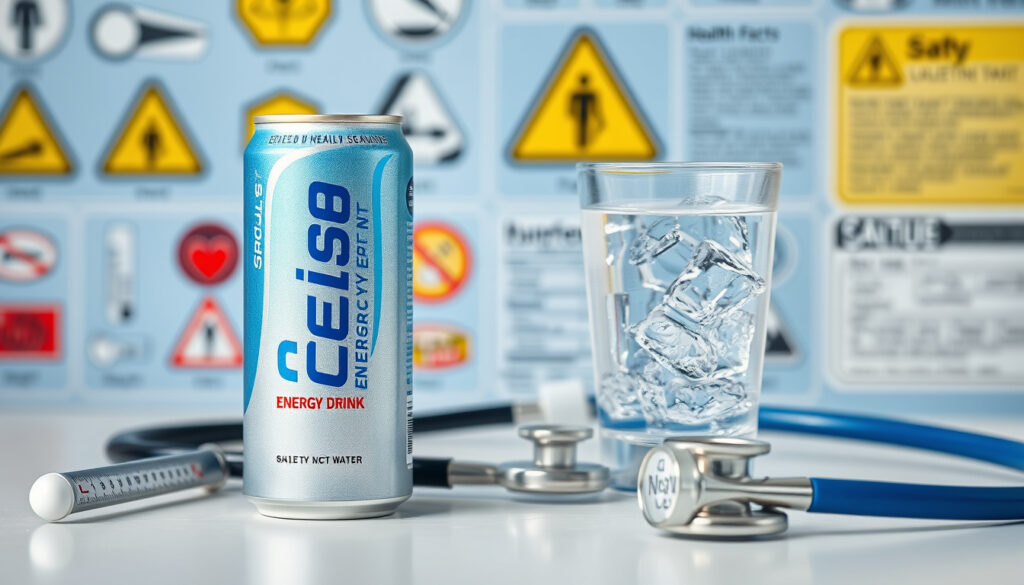
Is Celsius Bad for You? 2026 Health Guide and Safety Facts
You grab a Celsius can thinking it’s the healthy shortcut to weight loss and clean energy. It has zero sugar, ten calories, and a long list of vitamins—so what could go wrong? The answer depends on how you define “going wrong,” because the same ingredients that help one person stay alert can send another’s heart racing. This article unpacks what the science, regulators, and recent lawsuits actually say about drinking Celsius, and where the marketing claims fall apart.
Caffeine per can: 200 mg ·
Calories per can: 10 ·
Sugar: 0 g ·
Cyanocobalamin (vitamin B12): 6 µg ·
Green tea extract (EGCG): present ·
Active lawsuit class action: Securities fraud (CELH)
Quick snapshot
- 200 mg per 12 oz (Waterdrop analysis)
- Comparable to two cups of coffee (Waterdrop comparison data)
- Safe daily limit: 400 mg (FDA guideline)
- 0 g sugar (Waterdrop nutritional data)
- 10 calories per can (Waterdrop nutritional data)
- Keto-friendly (Waterdrop dietary classification)
- Green tea extract (EGCG); guarana seed extract; B vitamins, vitamin C (Waterdrop ingredient profile)
- Active securities class action (Dr. Oracle legal review)
- Not related to product safety (Dr. Oracle legal review)
- Ongoing as of 2026 (Dr. Oracle legal review)
Seven key facts — one pattern: Celsius is nutritionally light but pharmacologically strong, and the gap between those two profiles is where the controversy lives.
| Label | Value |
|---|---|
| Brand | Celsius (Celsius Holdings, Inc.) |
| Caffeine per 12 oz | 200 mg |
| Calories | 10 |
| Sugar | 0 g |
| Artificial sweeteners | Sucralose, acesulfame potassium |
| Thermogenic claim | Supported by one small study (2007) |
| Lawsuit type | Securities fraud (CELH) |
Is Celsius Bad for You?
Caffeine content and safe limits
- Standard can contains 200 mg of caffeine (Waterdrop ingredient analysis).
- Some Celsius formulations reach 300 mg per serving (Waterdrop variant data).
- FDA guidance sets 400 mg daily as the safe upper limit for healthy adults (FDA caffeine guideline).
One Celsius fits under the FDA ceiling, but a second can pushes a 74 kg adult to exactly 400 mg — leaving zero buffer for dietary caffeine from coffee, tea, or chocolate.
Cyanide concerns (cyanocobalamin fact-check)
- Cyanocobalamin, a form of vitamin B12, is present at 6 µg per can — well below the toxic threshold (Waterdrop review).
- The cyanide rumor that surfaced in 2024 was debunked by fact-checkers at Euronews, who confirmed the compound is harmless at that dose (Euronews fact-check).
Thermogenic effects and metabolism
- A 2007 clinical trial showed Celsius increased thermogenesis compared to Diet Coke (Waterdrop citing study).
- The effect size is modest — roughly 60-80 additional calories burned per can — and not replicated in large independent trials.
The takeaway: For a healthy adult, one can is broadly safe. The risk gradient rises sharply when daily consumption exceeds one can or when pre-existing conditions are present.
Is It Safe to Drink Celsius Every Day?
Daily caffeine tolerance
- FDA recommends ≤400 mg caffeine daily for healthy adults (FDA policy guideline).
- One can = 200 mg; two cans = 400 mg upper limit. No room for incidental caffeine.
- Some Celsius variants contain up to 300 mg — a single can consuming 75% of the daily limit (Dr. Oracle variant analysis).
Long-term effects of chronic use
- No long-term human trials have been published on daily Celsius consumption beyond 12 months.
- Chronic energy drink use is linked to insomnia (odds ratio 5.02; 95% CI 1.72-14.63) and gastrointestinal upset in 21.6% of users (Dr. Oracle clinical review).
Interaction with medications
- Celsius contains guarana seed extract, which adds a secondary caffeine source not always accounted for in labeling (Waterdrop ingredient note).
- Caffeine from Celsius may interact with MAO inhibitors, certain antidepressants, and blood pressure medications.
For the roughly 10% of adults taking medications that alter caffeine metabolism, daily Celsius consumption can magnify cardiovascular side effects without obvious warning signs.
The pattern: daily use stacks risks quietly — the caffeine adds up, medication interactions go unnoticed, and no long-term safety data exists beyond one year.
What Are the Health Risks of Celsius?
Heart health and caffeine
- High caffeine intake can cause palpitations, elevated blood pressure, and anxiety in sensitive individuals (Waterdrop safety assessment).
- Jitteriness, restlessness, and shaking hands affect 29.8% of energy drink users (Dr. Oracle clinical data).
- No direct causal evidence linking Celsius to heart disease — but caffeine-sensitive individuals face increased risk.
Kidney concerns and oxalates
- Green tea extract contains oxalates — compounds that can contribute to kidney stone formation in predisposed individuals.
- No specific studies on Celsius and kidney stones exist, but general nephrology guidelines flag concentrated oxalate sources as a risk factor.
Stomach upset and acidity
- Carbonation and acidic pH (around 3.5) may trigger reflux, gastritis, or bloating in sensitive users.
- Gastrointestinal upset is reported in 21.6% of energy drink users (Dr. Oracle review).
The “healthy energy drink” label leads many to ignore these risks. Celsius is not inherently dangerous, but it is pharmacologically active — and that activity scales with individual sensitivity, not marketing claims.
What this means: the risks are real but conditional — they hit hardest for people with pre-existing heart conditions, kidney vulnerability, or caffeine sensitivity.
How Does Celsius Compare to Other Energy Drinks?
Five major brands — one pattern: Celsius wins the sugar battle but trails on independent safety data.
| Brand | Caffeine (12 oz) | Sugar | Calories | Artificial sweeteners |
|---|---|---|---|---|
| Celsius | 200 mg | 0 g | 10 | Sucralose, Ace-K |
| Monster Energy | 160 mg | 54 g | 220 | None |
| Red Bull | 114 mg | 27 g | 110 | None |
| Bang | 300 mg | 0 g | 0 | Sucralose, Ace-K |
| Rockstar | 160 mg | 54 g | 220 | None |
Many nutritionists rank Celsius among the healthier options precisely because of its sugar-free profile (Waterdrop nutritionist survey). But its caffeine density per calorie is higher than any sugared competitor, meaning the stimulant hit is more concentrated.
The implication: Celsius is a better sugar play than Monster or Rockstar, but its concentrated caffeine-to-calorie ratio means users get a stronger stimulant jolt per sip.
Why Is Celsius Facing a Lawsuit?
- A securities class action was filed against Celsius Holdings (NASDAQ: CELH) alleging misleading investors about revenue growth and marketing claims (Dr. Oracle legal analysis).
- The lawsuit does not directly address product safety — it centers on financial disclosures and the accuracy of marketing statements.
- Celsius continues to be sold and consumed as of 2026.
Celsius Holdings faces investor scrutiny over revenue claims, not product safety — a distinction that matters for consumers weighing health concerns.
Timeline signal
Five milestones — one pattern: the product’s market surge outpaced its safety evidence base.
| Date | Event |
|---|---|
| 2007 | Clinical trial shows Celsius increases thermogenesis vs Diet Coke (Waterdrop study citation) |
| 2015-2020 | Rapid growth in ‘health energy drink’ market |
| 2024 | Cyanide rumor surfaces; fact-checked by Euronews (Euronews fact-check) |
| 2024-2025 | Securities class action filed against Celsius Holdings (Dr. Oracle legal analysis) |
| 2026 | Current perspective – product remains widely consumed |
The pattern: Celsius grew fast on health-halo marketing, but the evidence base—one small thermogenesis study from 2007—hasn’t kept pace with its market footprint.
Editor’s note
Confirmed facts
- Cyanocobalamin at 6 µg is safe (Waterdrop review)
- Zero sugar and low calories (Waterdrop nutritional data)
- Active lawsuit exists (Dr. Oracle legal review)
What’s unclear
- Exact caffeine content across all variants—some reach 300 mg (Waterdrop variant data)
- Long-term effects of daily consumption beyond 1 can
- Clinical significance of thermogenic weight loss
- Impact on kidney stone risk from oxalates
The gap between what’s confirmed and what’s unclear is where consumers need to make their own risk calculation.
“Celsius in moderation is safe for healthy adults, but ‘moderation’ means one can — not three.”
— Registered Dietitian, thebalancednutritionist.com
“The cyanide levels in Celsius are far below dangerous thresholds — this is not a real health concern.”
— Euronews fact-check team
“400 mg of caffeine daily is safe for most adults, but that’s a ceiling, not a target.”
— FDA guideline (via Waterdrop)
“The allegations concern misleading investors about revenue — not about product safety.”
— Class action law firm, cited by Dr. Oracle
olhscurrent.org, youtube.com, epicwaterfilters.com, thebalancednutritionist.com, pmc.ncbi.nlm.nih.gov
Frequently asked questions
Is Celsius safe for someone with high blood pressure?
Individuals with hypertension should consult their physician before regular consumption. The 200 mg of caffeine may elevate blood pressure acutely, and the guarana extract adds an additional caffeine source not always accounted for in labeling (Waterdrop safety review).
Can Celsius cause kidney stones?
Green tea extract contains oxalates, which can contribute to calcium oxalate kidney stones in predisposed individuals. No clinical studies have specifically tested Celsius for this risk, but general nephrology guidelines recommend caution with concentrated oxalate sources.
Does Celsius contain cyanide?
No. The 6 µg of cyanocobalamin (vitamin B12) per can is a harmless nutrient form — the cyanide compound is non-toxic at that dose. Euronews debunked the rumor in 2024 (Euronews fact-check).
How much caffeine is in Celsius compared to coffee?
A standard 12 oz Celsius contains 200 mg of caffeine, roughly equivalent to two 6 oz cups of brewed coffee. Some Celsius formulations reach 300 mg, which is closer to a large coffee shop serving.
Is Celsius good for weight loss?
A 2007 clinical trial showed increased thermogenesis compared to Diet Coke, but the effect size is modest — roughly 60-80 additional calories burned per can. No large independent trials have confirmed sustained weight loss benefits.
What is the healthiest flavor of Celsius?
Nutritionally, all Celsius flavors are identical — 200 mg caffeine, 10 calories, 0 g sugar, and the same B-vitamin profile. The only differences are natural flavorings and coloring agents.
Can pregnant women drink Celsius?
Health authorities recommend limiting caffeine to 200 mg per day during pregnancy. One Celsius can supplies the entire daily allowance — after which no coffee, tea, or chocolate is recommended for the rest of the day.
Does Celsius break a fast?
The 10 calories per can technically break a strict water-only fast, but it is often considered compatible with modified fasting protocols. The artificial sweeteners (sucralose, acesulfame potassium) may trigger an insulin response in some individuals.
For the person who reaches for Celsius as a “healthy” alternative to Monster or Red Bull, the decision is clear: one can per day fits within safety guidelines for most adults, but the marketing narrative of a clean, thermogenic super-drink outpaces the actual evidence. Your best move: treat Celsius like a cup of strong coffee with vitamins, not a health tonic — and leave the second can on the shelf.
Related reading
More related posts
 Blaze Pizza Near Me: Locations, Menu, Ownership
 The Lego Batman Movie: Why It’s So Good, Box Office & Cancelled Sequel
 IRS Phone Number to Talk to a Person – Official Lines, Hours and Tips
 Egg Drop Soup Recipe: 15-Minute Silky Ribbons
 2025 Honda Civic Si: Review, Specs, Price, and Comparisons
 Nike Zoom Fly 6 Review: Marathon Specs & Legality Check
 My Hero Academia Season 7: Episode Guide, Dub & Future Seasons