Food High in Iron: Top Sources Ranked by Absorption
Feeling run down and low on energy? Low iron might be the hidden cause. With roughly 30% of the world’s population affected by iron deficiency, it’s the most common nutritional deficiency globally. This guide cuts through the confusion by ranking iron-rich foods not just by total iron content, but by how effectively your body can absorb and use that iron — so you can make every bite count.
Recommended daily iron (women): 18 mg ·
Recommended daily iron (men): 8 mg ·
Iron deficiency prevalence: ~30% of population ·
Heme iron absorption rate: 15–35% ·
Non-heme iron absorption rate: 2–20% ·
Top source (beef liver, 3 oz): ~5 mg iron
Quick snapshot
- Iron deficiency is the most common nutritional deficiency worldwide (NIH Office of Dietary Supplements (U.S. federal agency))
- Heme iron is absorbed 2–3 times better than non-heme iron (NIH Office of Dietary Supplements)
- Vitamin C significantly increases non-heme iron absorption (FAO (Food and Agriculture Organization of the UN))
- Exact daily iron requirement varies by individual absorption efficiency (NIH Office of Dietary Supplements)
- Long-term effects of high-dose iron supplements on the gut microbiome are still being studied (PMC review: Iron Absorption Factors)
- Iron absorption from food begins within hours; heme iron enters bloodstream faster than non-heme (NIH Office of Dietary Supplements)
- With consistent dietary changes, iron stores (ferritin) can rise measurably in 2–4 weeks (Nutrition Australia fact sheet)
- Pair iron-rich meals with vitamin C to boost absorption up to 6× (FAO)
- Avoid tea/coffee with meals to prevent up to 60% reduction in iron uptake (Nutrition Australia fact sheet)
| Category | Details |
|---|---|
| Heme iron sources | Red meat, poultry, fish |
| Non-heme iron sources | Beans, lentils, spinach, fortified grains |
| Absorption enhancer | Vitamin C (e.g., citrus, bell peppers) |
| Absorption inhibitor | Calcium, tannins (tea, coffee), phytates |
What food is most high in iron?
The highest iron content per serving comes from organ meats and fortified cereals, but absorption rates vary drastically. Here’s how the top contenders compare.
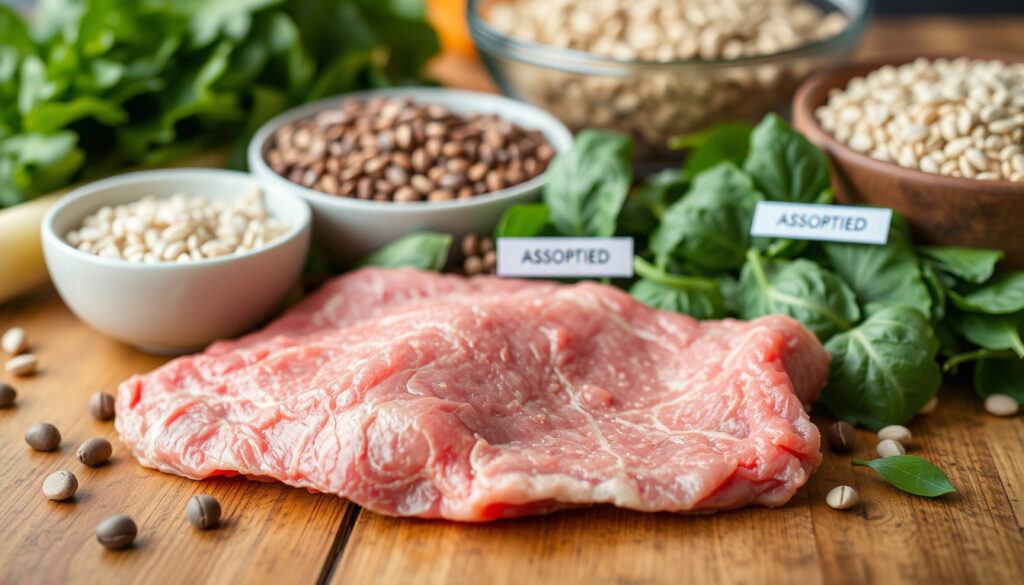
Heme iron sources: meat and seafood
- Beef liver (3 oz, cooked): ~5 mg iron, with absorption rates up to 25–30% (ACS Omega review (peer-reviewed chemistry journal))
- Lean beef (3 oz): ~2.5 mg iron (NIH Office of Dietary Supplements consumer fact sheet)
- Chicken liver (3 oz): ~11 mg iron (USDA FoodData Central (U.S. government nutrition database))
Non-heme iron sources: plant-based options
- Lentils (1 cup cooked): ~6.6 mg iron (NIH Office of Dietary Supplements)
- Spinach (1 cup cooked): ~3 mg iron (NIH Office of Dietary Supplements)
- Fortified breakfast cereal (1 cup): up to 18 mg iron (NIH Office of Dietary Supplements)
Organ meats like liver deliver the most absorbable iron per bite — but for plant-based eaters, fortified cereals offer a massive dose (up to 18 mg per serving). The catch: non-heme iron from plants is only 2–20% absorbed, so pairing with vitamin C is essential.
The implication: if you need to raise iron fast, heme sources (meat, poultry, fish) give you the most bang for your buck because absorption efficiency is 2–3 times higher than plant-based alternatives (NIH Office of Dietary Supplements).
How can I raise my iron levels fast?
Boosting iron isn’t just about what you eat — it’s about how you combine foods. Follow these steps to maximize absorption.
- Pair iron with vitamin C. Add citrus fruits, bell peppers, or broccoli to your meal. A food source with 50 mg ascorbic acid can significantly enhance non-heme iron uptake (FAO).
- Separate iron-rich meals from tea, coffee, and dairy. Tannins and calcium can reduce absorption by up to 60% (Nutrition Australia fact sheet). Wait at least one hour after eating.
- Include meat, fish, or poultry in the same meal. Even a small amount of animal protein boosts non-heme absorption from plant foods (FAO).
- Cook plant foods thoroughly. Heating reduces phytates and improves available iron content (Nutrition Australia fact sheet).
- Consider fortified sources like breakfast cereals, which can provide 100% of the daily value in a single serving (NIH Office of Dietary Supplements).
Don’t overdo calcium-rich foods (dairy, supplements) at the same meal as iron. Calcium competes for absorption. And if you’re taking iron supplements, space them 2 hours apart from calcium or antacids (ACS Omega review).
The trade-off: quick fixes like supplements can raise levels fast but may cause side effects. Dietary changes take a few weeks but are safer and more sustainable for long-term maintenance.
What drink is high in iron?
Liquid sources can be a convenient way to top up iron, especially if you struggle with food volume. Here are the most effective options.
Prune juice
- 1 cup (240 ml) provides ~3 mg iron (USDA FoodData Central)
- Also contains vitamin C, which aids absorption
Beetroot juice
- 1 cup provides ~1 mg iron (USDA FoodData Central)
- Rich in nitrates that support blood flow, but iron content is modest
Fortified protein shakes and smoothies
- Some commercial shakes add iron — check labels for up to 4 mg per serving
- Blend with spinach and citrus for a natural boost
Prune juice is the clear winner among drinks for iron content. But even 3 mg per cup is less than a serving of lentils — so think of drinks as a supplement to solid food, not a replacement.
The pattern: drinks high in iron are either dried fruit concentrates (prune, grape) or fortified products. They’re useful for a quick hit but lack the protein and other nutrients that come with whole food sources.
What are signs of lack of iron?
Recognizing deficiency early can prevent more serious health problems. The most common symptoms are listed below.
- Fatigue and weakness — the hallmark symptom, affecting daily energy levels (NIH Office of Dietary Supplements)
- Pale skin and brittle nails — reduced hemoglobin causes pallor (NIH National Heart, Lung, and Blood Institute (U.S. health agency))
- Shortness of breath — especially during exercise (NHLBI)
- Restless legs — a lesser-known but frequent sign (NHS UK (U.K. national health service))
The catch: these symptoms are nonspecific. A blood test measuring ferritin and hemoglobin is the only reliable way to confirm iron deficiency (NHLBI).
Which fruit is full of iron?
Fruits are not the highest iron source, but some pack a surprising punch — especially in dried form.
Dried fruits: raisins, apricots, prunes
- Dried apricots (half cup): ~2 mg iron (USDA FoodData Central)
- Raisins (half cup): ~1.5 mg iron (USDA FoodData Central)
Fresh fruits: mulberries, watermelon
- Mulberries (1 cup): ~2.6 mg iron (USDA FoodData Central)
- Watermelon (1 wedge, about 280 g): ~0.7 mg iron (USDA FoodData Central)
Fruits provide iron in non-heme form, which is poorly absorbed. But pairing them with vitamin C (which most fruits already contain) helps. Dried fruits are more concentrated, so a small serving goes further.
What this means: fruits alone won’t fix severe deficiency, but they’re a useful addition to a broader strategy — especially mulberries and dried apricots.
Confirmed facts vs. What’s unclear
Confirmed facts
- Iron deficiency is the most common nutritional deficiency worldwide (NIH Office of Dietary Supplements)
- Heme iron is absorbed 2–3 times better than non-heme iron (NIH Office of Dietary Supplements)
- Vitamin C significantly increases non-heme iron absorption (FAO)
What’s unclear
- Exact daily iron requirement varies by individual absorption efficiency (NIH Office of Dietary Supplements)
- Long-term effects of high-dose iron supplements on the gut microbiome (PMC review)
Expert perspectives
Heme iron from animal foods is the gold standard for absorption. A 3-ounce serving of red meat delivers iron that your body can use two to three times more efficiently than the same amount from spinach or beans.
— Harvard Health Publishing (health education division of Harvard Medical School)
For plant-based eaters, the key is pairing. Add bell peppers to your lentil soup or have an orange with your fortified cereal. The vitamin C can boost non-heme iron absorption by up to six times.
— British Dietetic Association (U.K. professional body for dietitians)
Summary
Whether you’re a meat-eater or plant-based, the smartest way to raise your iron levels is to combine high-iron foods with absorption enhancers while avoiding inhibitors. For someone dealing with fatigue or diagnosed deficiency, the choice is clear: prioritize heme sources if possible, or pair fortified plant foods with vitamin C, and get a blood test to confirm before reaching for supplements.
uhsussex.nhs.uk, ods.od.nih.gov, courses.lumenlearning.com, pmc.ncbi.nlm.nih.gov, hgic.clemson.edu, frontiersin.org, pubmed.ncbi.nlm.nih.gov
Frequently asked questions
Can you get too much iron from food?
Iron overload from food alone is rare in healthy individuals because the body regulates absorption. However, people with hemochromatosis (a genetic disorder) should avoid high-iron foods and supplements (NIH Office of Dietary Supplements).
What foods block iron absorption?
Calcium (from dairy, supplements), tannins (tea, coffee), and phytates (whole grains, legumes) are the main inhibitors. Separate these from iron-rich meals by at least one hour (ACS Omega review).
How long does it take to raise iron levels with diet?
With consistent changes — eating high-iron foods daily and optimizing absorption — ferritin levels can start rising within 2–4 weeks. Full correction of deficiency may take 2–3 months (Nutrition Australia fact sheet).
Is it better to take iron supplements or eat iron-rich foods?
Food first — it provides additional nutrients and better absorption control. Supplements are recommended only when diet alone cannot correct deficiency, and under medical supervision to avoid toxicity (NIH Office of Dietary Supplements).
What are the best iron-rich foods for pregnancy?
Pregnant women need 27 mg daily. Iron-rich options: lean red meat, poultry, cooked spinach, lentils, and fortified cereals. Pair with vitamin C-rich foods. Iron supplements are often prescribed during pregnancy (NIH Office of Dietary Supplements).
Do cooking methods affect iron content in food?
Yes. Cooking in cast iron pans can add small amounts of iron to acidic foods like tomato sauce. Boiling leafy greens reduces iron content slightly, while steaming retains more. Cooking plant foods generally improves iron availability by breaking down phytates (Nutrition Australia fact sheet).
More related posts
 What Does Pink Eye Look Like – Guide to Types and Symptoms
 IRS Phone Number to Talk to a Person – Official Lines, Hours and Tips
 Water Heater Repair Near Me – San Jose Costs, Signs & Services
 AT&T Store Near Me in Ireland: Roaming, Plans & Travel Tips
 Chuck E. Cheese: History, Pricing, Locations & More
 Oh What Fun Cast – Full Characters and Crew Guide
 New Balance 9060 Grey: Ireland Stock, Prices & Buy Guide
 How to Fix a Zipper: Quick Fixes for Separated or Stuck