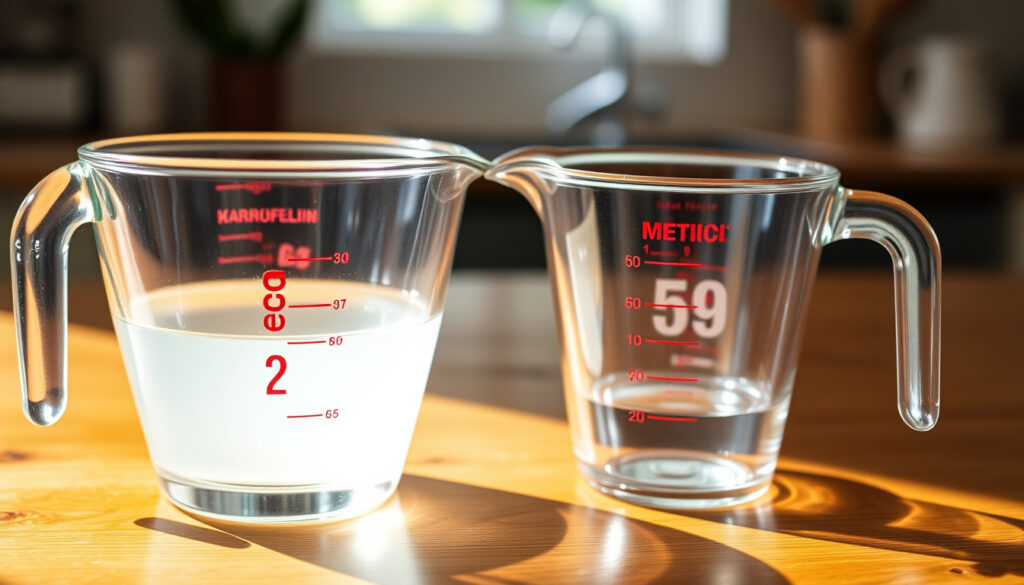
2 oz to ml: Exact US & UK Conversion Guide
If you’ve ever looked at a measuring cup and wondered why 2 oz doesn’t always mean the same amount in milliliters, you’re not alone. The answer depends on whether you’re using US or UK fluid ounces — and getting it wrong can throw off a recipe or a medicine dose.
1 US fluid ounce: 29.5735 mL · 2 US fluid ounces: 59.147 mL · 1 UK fluid ounce: 28.4131 mL · 2 UK fluid ounces: 56.826 mL · Common rounding for 2 oz: 60 mL · Standard conversion factor (US): 29.5735
Quick snapshot
- 1 US oz = 29.5735 mL (Wikipedia’s fluid ounce entry)
- 2 US oz = 59.147 mL (Wikipedia fluid ounce definition)
- Easy with formula: mL = oz × 29.5735 (Wikipedia’s fluid ounce entry)
- US ounce is larger — 29.5735 mL vs 28.4131 mL (Wikipedia fluid ounce comparison)
- 2 UK oz = 56.826 mL (UnitConverters.net imperial conversion tool)
- Difference: about 2.32 mL (Wikipedia fluid ounce comparison)
- 2 oz = ¼ cup (U.S. measure)
- 2 oz = 4 tablespoons
- 60 mL (rounded) on many product labels
- Use a liquid measuring cup with mL markings
- Syringe or dropper for small medicine doses
- Kitchen scale for weight-based accuracy
Two conversion systems, one key difference: US and UK fluid ounces give different milliliter totals for the same volume in ounces.
Here is how those values stack up in a direct comparison.
| Measurement | US fluid ounce (mL) | UK fluid ounce (mL) |
|---|---|---|
| 1 oz | 29.5735 | 28.4131 |
| 2 oz | 59.147 | 56.826 |
| 4 oz | 118.294 | 113.652 |
| 8 oz | 236.588 | 227.305 |
Does 2 oz equal 60 mL?
The exact conversion for US fluid ounces
- 1 US fluid ounce = 29.5735295625 mL exact (Wikipedia’s fluid ounce entry)
- 2 US fluid ounces = 59.147059125 mL
- 60 mL is a rounded value, close but not exact
The exact value is 59.147 mL — 0.853 mL short of 60. For most cooking purposes that tiny difference is negligible, but for pharmaceutical dosing it matters.
When rounding 60 mL is acceptable
Many consumer products label 2 oz as 60 mL because of rounding rules. The U.S. Food and Drug Administration (labeling authority) allows certain tolerances on Nutrition Facts panels. The difference is about 1.4% — well within typical manufacturing variance.
The catch: If you’re following a medical dosing instruction that says “2 oz”, and you reach for a 60 mL cup, you’ll be getting about 0.85 mL more than the exact US ounce. That’s usually safe, but always confirm the standard on the package.
Why this matters: In medication, a 1.4% error repeated across doses can accumulate. Use exact mL markings when precision is critical.
How much is 2 oz in mL?
US fluid ounces to milliliters
The formula is straightforward: mL = ounces × 29.5735. So 2 × 29.5735 = 59.147 mL. This is the standard for all U.S. legal and culinary measurements, defined by the National Institute of Standards and Technology (NIST, Office of Weights and Measures).
UK fluid ounces to milliliters
For imperial (UK) fluid ounces, use mL = ounces × 28.4131. Thus 2 UK fl oz = 56.826 mL. This is the legal standard in the United Kingdom and many Commonwealth countries, as noted by Metric Conversions UK-focused converter.
The pattern: A cook using a UK recipe in the U.S. will need to adjust: 2 UK oz is about 2.32 mL less than 2 US oz. That difference affects liquid-to-dry ingredient ratios in baking.
The implication: Always check the system your recipe or label uses before converting. A single assumption can shift your result by nearly 4%.
Is 2 oz 30 mL?
Why 2 oz is not 30 mL
No — 30 mL equals approximately 1 US fluid ounce, not 2. This confusion often comes from the fact that 1 oz ≈ 30 mL in rough rounding. But 2 oz ≈ 59 mL, and 30 mL is about 1.01 oz. The error is nearly 100% if you mistake 30 mL for 2 oz.
- 1 US oz = 29.5735 mL (Wikipedia fluid ounce data)
- 30 mL is commonly used as a rounded single-ounce serving on beverage labels (FDA rounding guidelines)
Common mistakes in volume conversion
People often misremember the factor or mix up ounce weight with fluid ounce. A fluid ounce measures volume, not weight. A dry ounce is a different beast — that’s weight for solids.
The pattern: The 30 mL = 2 oz myth persists because of rough packaging and careless teaching. The reality: 30 mL is one ounce, not two.
How many ounces is 60 mL?
Converting 60 mL back to ounces
- 60 mL ÷ 29.5735 = 2.03 US fluid ounces (Omni Calculator oz–mL converter)
- 60 mL ÷ 28.4131 = 2.11 UK fluid ounces
So 60 mL is slightly more than 2 US oz and noticeably more than 2 UK oz.
When you might see 60 mL = 2 oz on packaging
Many U.S. products round 2 oz to 60 mL because the FDA allows “reasonable variations” in net quantities. This is common for mouthwash, cough syrup, and small beverage bottles.
What this means: If a product label says “2 oz (60 mL)”, the actual fill usually falls between 59 and 61 mL. That’s legal but not exact.
How to measure 2 oz?
Using measuring cups and spoons
- 2 US fl oz = ¼ cup (use a standard liquid measuring cup)
- 2 US fl oz = 4 tablespoons
- 2 US fl oz = 6 teaspoons
Fill the cup to the ¼-cup line or use a tablespoon measure four times.
Using a kitchen scale
If you have a scale that measures grams, note that 2 US fluid ounces of water weighs about 59.1 grams (since 1 mL water ≈ 1 g). For other liquids, density changes the weight — use a volumetric measure instead.
Using a syringe or dropper
For small medicine doses, a 60 mL oral syringe gives accurate readings. Mark the 59 mL line for exact 2 US oz, or use the 60 mL line for a rounded dose.
Why it matters: Inaccurate measurement can ruin a recipe or, worse, cause a medication error. Stick with the right tool for the job.
Confirmed Facts & What’s Unclear
Confirmed facts
- 1 US fl oz = 29.5735295625 mL (NIST official definition)
- 1 UK fl oz = 28.4130625 mL (UnitConverters.net imperial standard)
- 2 US fl oz = 59.147059125 mL
- 2 UK fl oz = 56.826125 mL
- The imperial fluid ounce is about 4.084% smaller than the US fluid ounce (Wikipedia fluid ounce comparison)
What’s unclear
- Why some consumer products label 2 oz as exactly 60 mL without noting rounding
- Historical variations in fluid ounce definitions before standardization
- How often non-U.S. products use US fluid ounces on international labels
Expert Perspectives
“The U.S. fluid ounce is defined as exactly 29.5735295625 mL for legal purposes, based on the international inch of 25.4 mm.”
— NIST Special Publication 811 (weights and measures authority)
“The imperial fluid ounce is 28.4130625 mL, making it approximately 4% smaller than its U.S. counterpart — a distinction that often confuses transatlantic cooks and pharmacists.”
— Wikipedia – Fluid ounce (community encyclopedia)
“FDA labeling rules permit reasonable variations in declared net quantity, allowing ‘2 fl oz (60 mL)’ as long as the actual fill is within acceptable tolerances.”
— U.S. Food and Drug Administration (food and drug regulator)
For anyone measuring liquid medicine at home, the difference between US and UK ounces could mean under- or overdosing — always check the ounce standard on your package, or use metric mL markings for precision.
ovacen.com, dwello.in, unitconverters.net, propacks.net, metricviews.uk, squareyards.ca, youtube.com, ninjaunits.com
Frequently asked questions
How many mL is 1 oz?
1 US fluid ounce = 29.5735 mL. 1 UK fluid ounce = 28.4131 mL.
What is the formula to convert oz to mL?
mL = ounces × 29.5735 (US) or mL = ounces × 28.4131 (UK).
Is 2 oz the same as 2 fl oz?
Yes, “oz” in liquid contexts almost always means fluid ounce. But distinguish between US and UK fluid ounces.
How to convert 3 oz to mL?
3 US oz × 29.5735 = 88.7205 mL. 3 UK oz × 28.4131 = 85.2393 mL.
Why do US and UK fluid ounces differ?
Historical reasons: the US retained the Queen Anne wine gallon; the UK adopted the imperial gallon in 1824, which defined a smaller fluid ounce.
Can I use a dry ounce measure for liquids?
No — a dry ounce measures weight (28.35 g), not volume. Liquid ounces are fluid ounces, a different unit.
What is the difference between fluid ounce and ounce weight?
A fluid ounce measures volume (mL); an ounce weight measures mass (grams). They are not interchangeable.
More related posts
 50 Cent Net Worth 2024: Billionaire or $100 Million
 F1 (Film) Reviews 2025: Is It Worth Watching? Brad Pitt & Scores
 Best Ukulele for Beginners 2025: Expert Picks & Buyer’s Guide
 How to Detox Your Body – Science-Based 7-Day Plan
 Olive Garden Never Ending Pasta 2026: Price, Pass, and How It Works
 Mary Makes It Easy Recipes: BBC Show Guide & Best Dishes
 Red Light Therapy Benefits – What Science Reveals
 No Hard Feelings Cast – Stars, Roles and Production Facts