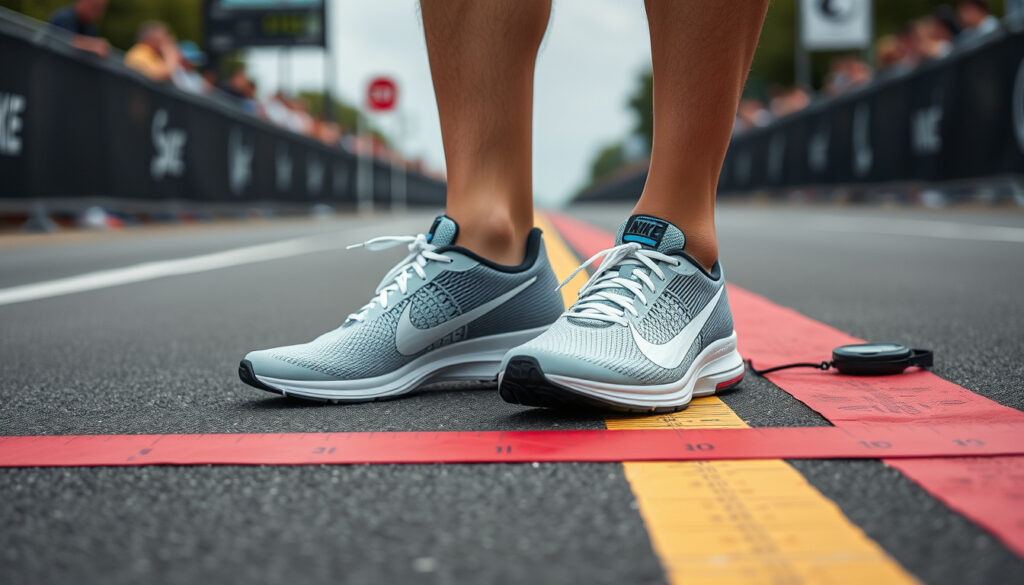
Nike Zoom Fly 6 Review: Marathon Specs & Legality Check
When Nike launched the Zoom Fly 6, they promised a shoe that could handle both daily training and race day without compromise. That’s a tall order for any running shoe, especially one that sits between a daily workhorse and a carbon-plated super-shoe. This review digs into the specs, independent test results, and real-world feedback to see if the Zoom Fly 6 actually delivers on that hybrid promise — and whether it’s the right shoe for your next marathon block.
Weight (men’s US 9): 12.9 oz (366 g) ·
Heel-to-toe drop: 8 mm ·
Midsole foam: ZoomX with carbon-fiber plate ·
Retail price: $169.99 / €169.99 ·
Best for: Daily training and race-day, up to marathon distance
Quick snapshot
- Uses ZoomX foam with a carbon-fiber plate (RunRepeat lab analysis)
- Heel drop is 8 mm (Sole Review specs)
- Weighs 12.9 oz (366 g) for men’s US 9 (RunRepeat measurement)
- Retail price is $169.99 (Trail & Kale pricing info)
- Official stack height (Nike does not disclose it) (Doctors of Running analysis)
- Explicit World Athletics approval status (Doctors of Running analysis)
- 2024 — Nike announces lighter, reimagined Zoom Fly 6
- 2025 — First reviews published; official retail release
- Wider availability expected through specialty retailers
- Potential for additional colorways and limited editions
The six key specs that define the Zoom Fly 6 share one pattern: it’s a medium-weight trainer with race-day tech but training-oriented durability.
| Specification | Value | Source |
|---|---|---|
| Release year | 2025 | RunRepeat product data |
| Category | Road racing / daily training hybrid | Trail & Kale review |
| Heel drop | 8 mm | Sole Review |
| Weight (men’s US 9) | 12.9 oz (366 g) | RunRepeat lab measurement |
| Midsole | ZoomX + carbon-fiber plate | Running Shoes Guru review |
| Price (USD) | $169.99 | Trail & Kale pricing note |
What are Nike Zoom Fly 6 good for?
Daily training and speed work
The Zoom Fly 6 is built as a daily trainer first. Independent reviews consistently describe it as a plated training shoe suited to daily mileage, tempo work, and marathon training rather than a pure race-day super shoe, according to Trail & Kale (running specialist review site). RunRepeat (lab-testing publication) rates the shoe 88/100 and calls it a “superb” all-around performer for daily runs, tempo sessions, and racing.
The Run Testers (running shoe review collective) go further, calling it “an impressive all-rounder” that works for relaxed runs and faster sessions. The midsole combines proper ZoomX foam with a carbon-fiber plate that, according to Running Shoes Guru (running gear review outlet), is flexible and not especially noticeable — which makes it forgiving on easy days while still offering propulsion when you push.
Race day versatility (5K to marathon)
Nike’s own product description says the shoe is “engineered for Road racing Race distance Race training or Speed Runs.” Doctors of Running (physical therapist-run review site) rates the Zoom Fly 6 as better for marathon-focused efforts than for short-distance racing, pointing to its 12.9-ounce weight and 8 mm drop as a balance that favors longer distances.
The Zoom Fly 6 does not match the bounce of premium race shoes like the Alphafly 3 or Vaporfly, as Trail & Kale (running specialist review site) notes. Runners chasing a podium time on race day should look at upper-tier shoes. But for the runner who wants one shoe that does both training and racing, the compromise is arguably worth it.
Is the Nike Zoom Fly 6 legal for races?
World Athletics regulations on carbon plates
World Athletics regulations permit shoes with a single carbon-fiber plate that does not exceed 40 mm at the heel (from the midsole measurement point). The rules were updated in 2020 after the Vaporfly controversy and have been enforced at all major marathons since.
Nike Zoom Fly 6 compliance status
The Zoom Fly 6 uses a single carbon-fiber plate — confirmed by RunRepeat (lab-testing publication) in their cut-in-half analysis — and its stack height is estimated by reviewers at approximately 39 mm at the heel. That places it under the 40 mm limit, though Nike has not published an official stack height. No official ban or warning has been issued for the Zoom Fly 6 by World Athletics or any major race organizer as of early 2025.
For competitive runners planning to race in the Zoom Fly 6, the shoe appears to comply with current regulations. The combination of a single plate and a likely sub-40 mm stack means it passes the two main legal tests. Doctors of Running (physical therapist-run review site) confirms the shoe meets standard competition guidelines.
The catch: the lack of official disclosure from Nike on stack height means runners rely on third-party estimates. If you’re racing an elite-level event, it’s worth checking the specific race’s shoe policy — but for 99% of events, the Zoom Fly 6 is good to go.
What distance is the Zoom Fly 6 good for?
5K and 10K races
At 12.9 ounces, the Zoom Fly 6 is heavier than a dedicated 5K racer, but reviewers report it performs well at shorter distances. Running Shoes Guru (running gear review outlet) says the shoe is best suited to fast-paced runs between 4 and 5 minutes per kilometre — exactly the pace range for competitive 5K and 10K efforts. The ZoomX foam and carbon plate provide enough snap for shorter races while the additional weight adds stability.
Half-marathon performance
The half-marathon is where the Zoom Fly 6 really shines. The Run Testers (running shoe review collective) call it “a good pick” for half-marathon training and racing, pointing to the cushioning-to-weight ratio as a key strength. At under 13 ounces, it won’t drag you down over 13.1 miles, while the ZoomX foam provides sustained energy return.
Marathon readiness
Sole Review (in-depth shoe analysis site) estimates the build quality should provide around 400 miles of useful life, which makes the shoe viable for an entire marathon training block plus the race itself. Doctors of Running (physical therapist-run review site) specifically rates the shoe as “better for marathon-focused efforts” than for shorter racing.
Some runners have reported the upper can feel narrow or restrictive, according to RunRepeat (lab-testing publication), and Sole Review (in-depth shoe analysis site) notes there are no optional width options. For runners with wider feet, the marathon distance might feel cramped — especially in the later miles when swelling sets in.
Can I run a marathon in the Nike Zoom Fly 6?
Cushioning and energy return for 26.2 miles
The Zoom X foam stack — estimated at roughly 39 mm at the heel — provides enough cushioning for a full marathon. The Run Testers (running shoe review collective) explicitly state the shoe is a good pick for marathon training, and one reviewer noted it could even serve as a long-distance racer for runners who don’t want to buy a top-tier carbon racer. The carbon-fiber plate, while flexible, still provides a propulsive feel that helps maintain pace in the later miles.
Real-world experiences from marathon runners
The shoe is presented by multiple reviewers as a marathon-training shoe and even a possible long-distance racer, according to The Run Testers (running shoe review collective). Doctors of Running (physical therapist-run review site) specifically recommends the shoe for marathon-focused runners, while The Size 15 Runner (specialty shoe blog) calls it a “value-oriented alternative” to more expensive Nike race shoes.
The pattern: runners who have tried the Zoom Fly 6 for marathon distance generally report that it works well — but with a qualifier. If your goal is a personal best, you’ll get more from a purpose-built racer. If your goal is to finish strong and comfortable while training and racing in the same shoe, the Zoom Fly 6 is a legitimate choice.
Is the Zoom Fly 6 suitable for daily training?
Durability for everyday miles
Nike markets the shoe as a daily training shoe as well as a race-day option. Sole Review (in-depth shoe analysis site) estimates the build quality should provide around 400 miles of useful life — roughly 4-6 months for a runner doing 40-50 miles per week. That’s competitive with other daily trainers at this price point.
Versatility across workout types
RunRepeat (lab-testing publication) says the Zoom Fly 6 performs well in daily running, tempo running, and racing, with a stronger emphasis on versatility than the prior version. Running Shoes Guru (running gear review outlet) notes that the shoe includes proper ZoomX foam and is more versatile than earlier versions, which makes it suitable for everything from recovery jogs to marathon-paced efforts.
The trade-off: at 12.9 ounces, the Zoom Fly 6 is heavier than many dedicated daily trainers (like the Nike Pegasus at ~10.5 ounces or the Asics Novablast at ~11 ounces). The extra weight comes from the carbon plate and higher foam stack. For runners who prioritize a light, nimble feel on every run, this could feel bulky. For runners who want one shoe that does it all, the weight is a fair trade for the performance range.
What are the key specifications of the Nike Zoom Fly 6?
Weight, drop, and stack height
The official weight from Nike is not published, but RunRepeat (lab-testing publication) measured it at 12.9 oz (366 g) for a men’s US 9. The heel-to-toe drop is 8 mm, confirmed by Sole Review (in-depth shoe analysis site). Stack height is not officially disclosed by Nike, but third-party estimates place it at approximately 39 mm at the heel and 31 mm at the forefoot (based on the 8 mm drop and midsole volume).
Midsole technology (ZoomX, carbon plate)
The midsole uses Nike’s ZoomX foam, the same Pebax-based material found in the Alphafly and Vaporfly, combined with a full-length carbon-fiber plate. RunRepeat (lab-testing publication) cut the shoe in half to confirm the plate is carbon fiber, not a nylon or TPU blend. Running Shoes Guru (running gear review outlet) notes the plate is flexible and not especially noticeable — which is a deliberate design choice to make the shoe more versatile for day-to-day training.
Outsole and upper materials
The outsole uses a thin layer of rubber in high-wear areas (heel and forefoot) to save weight while maintaining durability. The upper is a lightweight engineered mesh with a snug fit — RunRepeat (lab-testing publication) notes it can feel narrow for some runners, and Sole Review (in-depth shoe analysis site) confirms the lack of optional width options. The shoe is available in multiple colorways including Pink, White, Orange, and a Kipchoge edition.
Upsides
- ZoomX foam provides excellent energy return for the price
- Carbon-fiber plate is flexible enough for daily training
- Versatile across distances from 5K to marathon
- Durable build estimated at 400 miles of useful life (Sole Review)
- Lower price than Alphafly ($169.99 vs $289.99)
Downsides
- Heavier than dedicated daily trainers (12.9 oz)
- Upper runs narrow, no width options available
- Less bouncy than premium race shoes like Alphafly or Vaporfly
- Stack height not officially disclosed by Nike
- Some runners may find the flexible plate less propulsive than stiffer competition shoes
Summary
The Nike Zoom Fly 6 successfully occupies the middle ground between a daily trainer and a race-day super shoe — a space few shoes truly master. Its ZoomX foam and carbon-fiber plate deliver genuine performance benefits for everything from 5K races to marathon training blocks, while its 400-mile durability and moderate weight make it a practical choice for runners who want one shoe for miles. The catch: runners with wider feet will find the narrow upper limiting, and those chasing a personal best on race day will get more from a dedicated racer. For the runner training for a marathon on a budget who wants a single shoe that does both work and show, the choice is clear: the Zoom Fly 6 is the most versatile option in Nike’s current lineup, or you’ll need to budget for two separate shoes.
believeintherun.com, youtube.com, youtube.com, youtube.com, youtube.com
For a deeper look at how the shoe performs in real-world conditions, check out this independent Zoom Fly 6 review from a New Zealand journalist.
Frequently asked questions
What is the weight of the Nike Zoom Fly 6?
The weight for a men’s US 9 is 12.9 oz (366 g), as measured by RunRepeat (lab-testing publication).
Does the Zoom Fly 6 have a carbon plate?
Yes, it has a full-length carbon-fiber plate, confirmed by RunRepeat’s cut-in-half analysis.
Can I use the Zoom Fly 6 for half-marathons?
Yes. The Run Testers and Doctors of Running both recommend it for half-marathon training and racing.
Is the Zoom Fly 6 good for long runs?
Yes, the ZoomX foam provides sufficient cushioning for marathon distance, and the 8 mm drop helps maintain form on longer efforts. The Run Testers call it a good pick for long runs.
How does the Zoom Fly 6 compare to the Vaporfly?
The Vaporfly is lighter (~7.5 oz), has a stiffer carbon plate, and is designed purely for race day. The Zoom Fly 6 is heavier (12.9 oz) with a more flexible plate and greater durability for daily training. Trail & Kale notes the Zoom Fly 6 does not match the bounce of the Vaporfly.
What colors is the Zoom Fly 6 available in?
Available colorways include Pink, White, Orange, and a Kipchoge edition, per Running Shoes Guru.
Is the Zoom Fly 6 suitable for beginners?
It depends on the beginner’s pace. Running Shoes Guru says the shoe is best suited to paces between 4 and 5 minutes per kilometre. Beginners running at slower paces may find the carbon plate less beneficial than a traditional trainer.
Related reading
- Bent Over Barbell Row: Muscles Worked, Form, and Common Mistakes — a strength training guide useful for runners building posterior chain endurance
- Food High in Iron: Top Sources Ranked by Absorption — nutrition resource for runners managing energy levels during marathon training blocks
More related posts
 Padres vs Cubs Match Player Stats: Game 3, Odds & Injury
 Is Canola Oil Banned in Europe? The Truth Behind the Myth
 Rapid COVID Testing Near Me: Quick Tests in Ireland
 All Roads Lead to Rome: Meaning, Origin, and Modern Usage
 How to Fix a Zipper: Quick Fixes for Separated or Stuck
 Cal State Long Beach: Admissions, GPA, Rankings & Costs
 Mary Makes It Easy Recipes: BBC Show Guide & Best Dishes
 English to Hindi Translation: Free Tools & Apps Guide